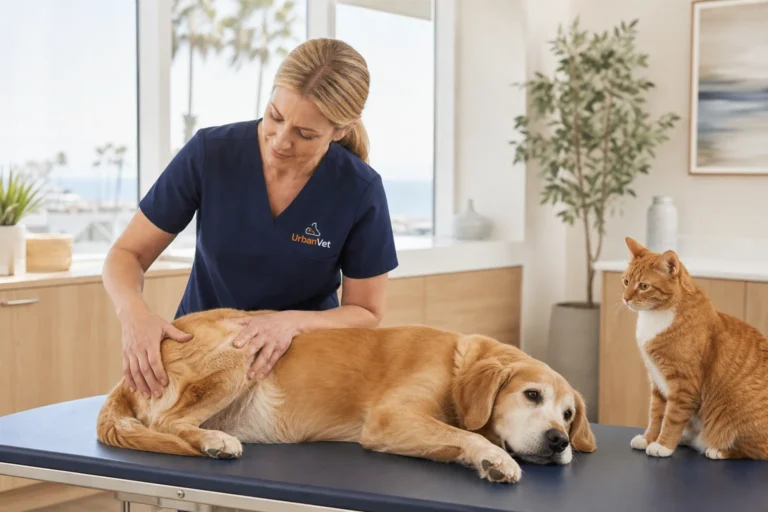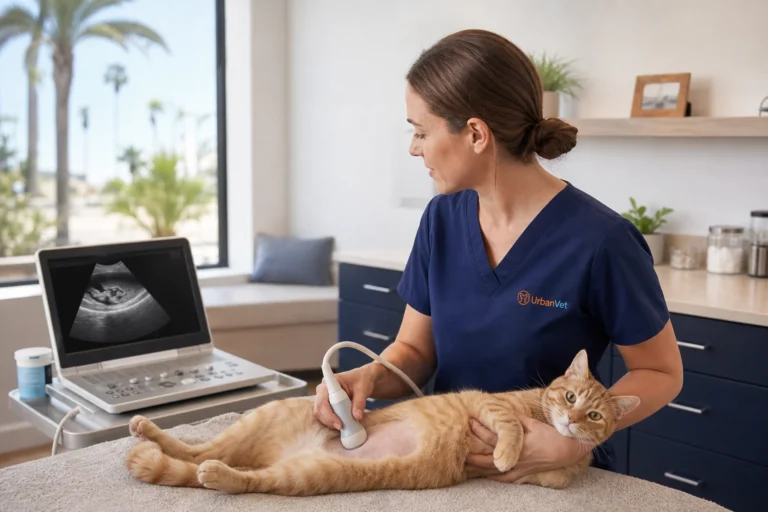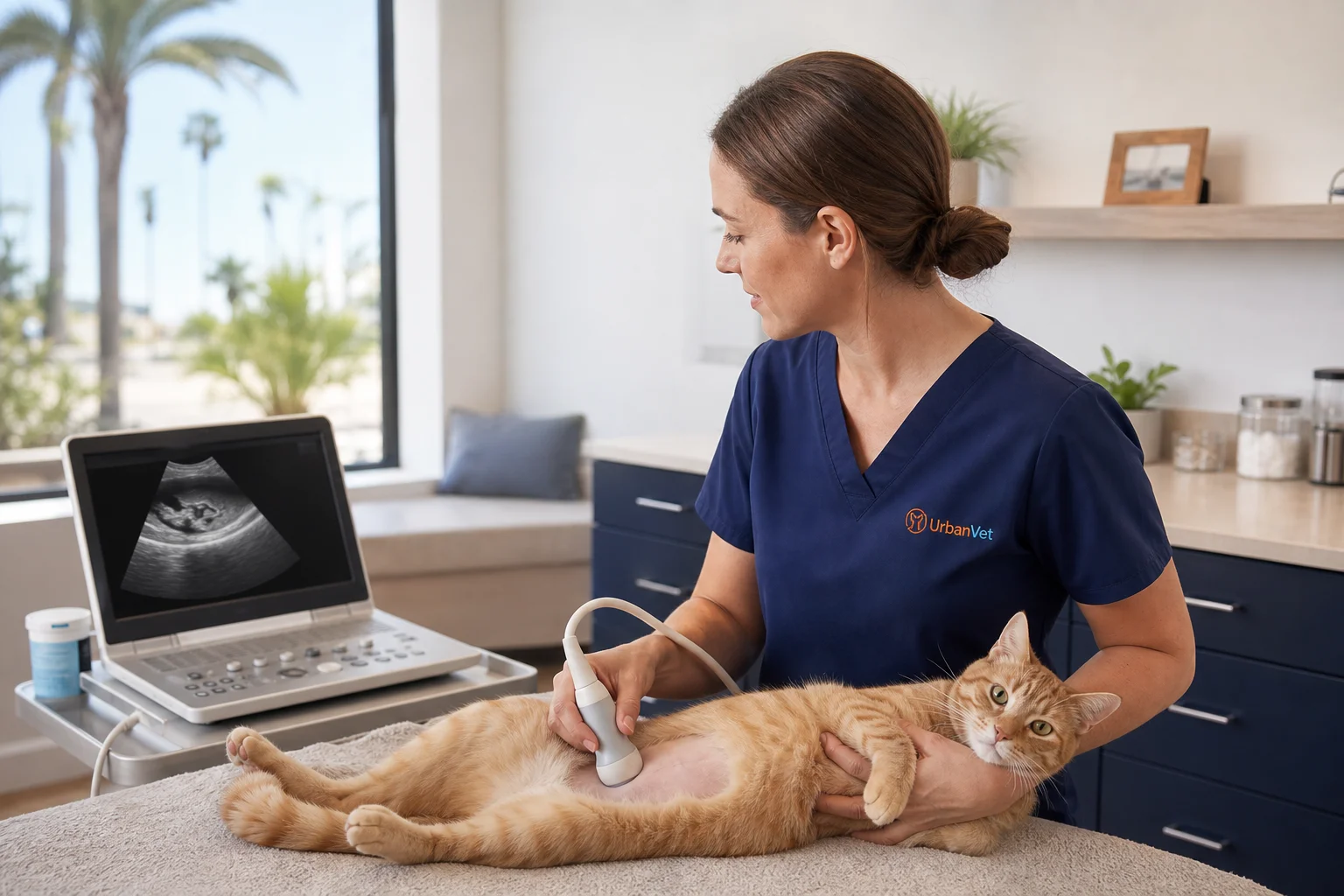
When your cat's bloodwork looks off or your vet feels something unusual during a hands-on exam, imaging is often the next step. Understanding why your vet wants an ultrasound for your cat helps you know what to expect: Pet Diagnostics lets our team see soft tissue, organ function, and blood flow that plain x-rays cannot capture.
By Urban Vet Team, Veterinary Professionals
What Symptoms Make a Vet Recommend an Ultrasound for a Cat?
Most cat ultrasounds start with a symptom, not a routine checkbox. Vomiting that won't resolve, unexplained weight loss, straining in the litter box, a new heart murmur, or bloodwork from our in-house diagnostic laboratory showing elevated kidney or liver values are the most common triggers. Pet owners seeking ultrasound help for a cat that suddenly stops eating or seems painful often start with a phone call describing what they've noticed at home. Occasionally a completely routine annual visit turns up something worth a closer look, which is one of the reasons ultrasound sometimes comes up during Primary & Preventative Pet Care checkups even when a cat seems fine on the surface. When a physical exam and blood panel raise more questions than answers, ultrasound is usually the fastest way to look deeper without surgery.
Why Your Vet Wants an Ultrasound for Your Cat Instead of Relying on an X-Ray Alone
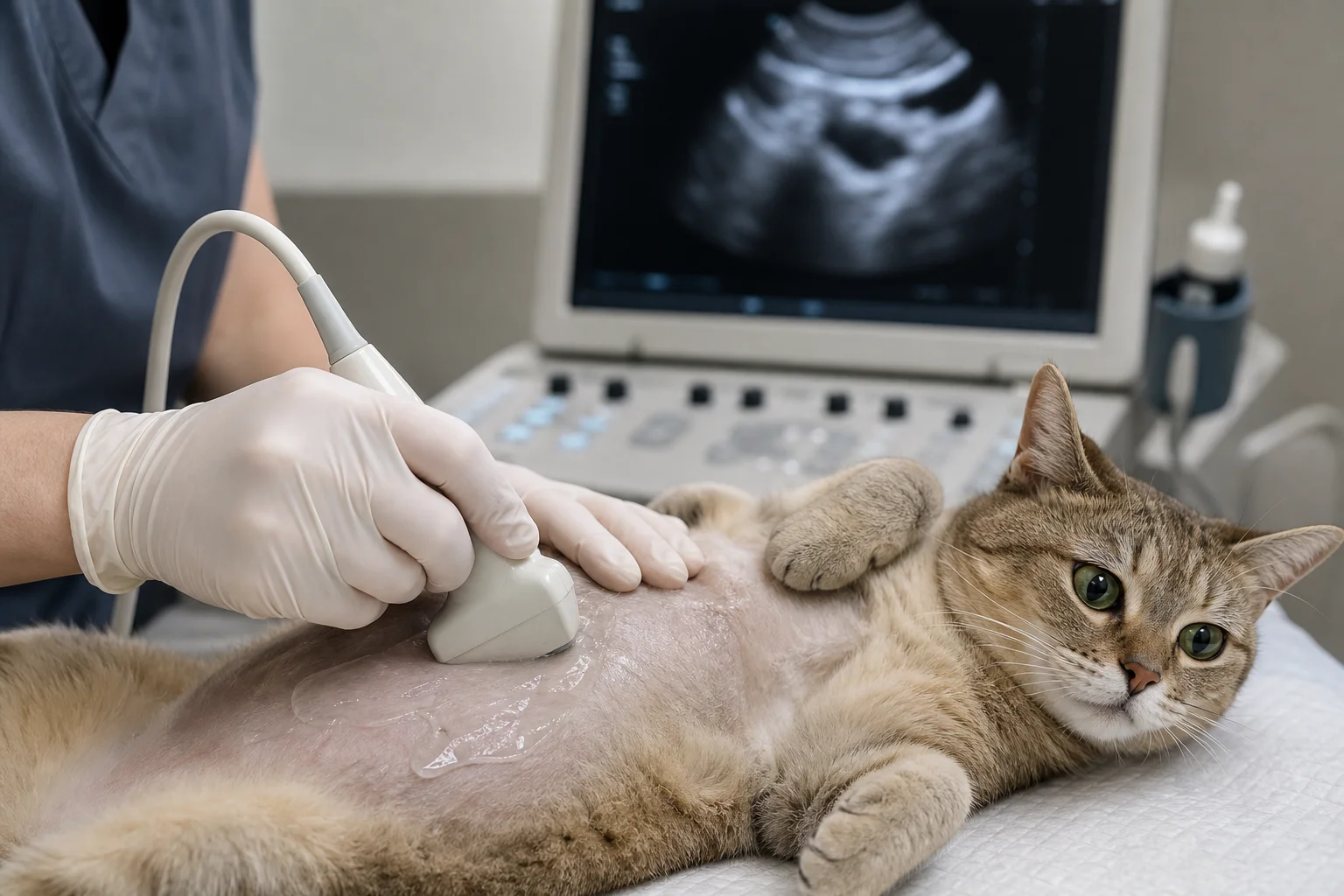
Here's why your vet wants an ultrasound for your cat once a physical exam or bloodwork points to a problem below the surface. X-rays are excellent at showing bone, gas patterns, and dense objects like a swallowed toy, but they flatten everything into a single still image. An ultrasound uses sound waves instead of radiation, sending a probe over the skin to build a live, moving picture of the organs underneath. Pet ultrasound imaging has become one of the most useful diagnostic tools in veterinary medicine because it shows how an organ is actually functioning, not just its outline. Vets use ultrasound specifically for that reason: it answers a different question than an x-ray does. For a dog and cat both, the same principle applies, soft tissue detail is where ultrasound earns its place next to, not instead of, an x-ray.
What Can a Cat Ultrasound Find That an X-Ray Can't?
An ultrasound builds detailed images of soft tissue that x-rays generally cannot resolve. That includes the walls of the bladder, the layers of the intestines, the size and texture of the kidneys and liver, and the chambers of the heart. Vets can watch blood flow move through vessels and organs in real time, spot early bladder stones or crystals, identify masses too small to feel by hand, and, in some cases, guide a needle precisely into an organ for a biopsy sample without opening the abdomen. Pregnancy, free fluid in the belly, and subtle changes in organ texture that come before a cat feels sick are often visible on ultrasound weeks before they would show up any other way. For many pet owners, this is the difference between a guess and a confirmed diagnosis, and a confirmed diagnosis is what makes effective treatment possible.
How Much Does a Cat Ultrasound Cost?
There's no single number that applies to every cat, because an ultrasound is really a few line items bundled together. The base imaging fee covers the exam itself and the time a veterinarian or sonographer spends scanning. On top of that, many cats need mild sedation to hold still for a full abdominal or cardiac study, which adds its own fee and sometimes a short recovery period at the hospital. Complex studies, like a full cardiac ultrasound or one that includes a guided biopsy, generally take longer and cost more than a quick check of a single organ like the bladder, since they often call in a specialist to read the images. Some clinics bill the ultrasound and the specialist's written report separately, others bundle them into one charge, so it's worth asking which applies before your appointment.
The clearest way to get an accurate number is to ask your vet three things: which organs or regions need to be scanned, whether sedation is likely for your cat's temperament, and whether the read will be done in-house or sent out to a radiologist. Bring your cat's recent bloodwork and describe the symptoms you've noticed. That information lets our team give you a real quote instead of a guess, and it's the best way to ensure there are no surprises on the bill. If cost is a concern, ask about pet insurance or a payment plan before the appointment rather than after.
Does My Cat Need to Be Sedated for an Ultrasound?
Not always. A calm cat having a quick bladder or kidney check often tolerates the exam awake, especially with a warm room, a soft towel, and a patient handler. Cats that are anxious, painful, or need a longer cardiac or full abdominal study usually do better with light sedation, since holding still for twenty to thirty minutes is hard for most cats to manage voluntarily. Your veterinarian will usually make this call after meeting your cat and reviewing what's being scanned, not before. If sedation is recommended, expect a short fasting window beforehand and a quiet recovery period at the animal hospital afterward before your cat goes home.
How Do I Prepare My Cat for an Ultrasound Appointment?
Preparation depends on what's being scanned. Abdominal ultrasounds usually go better with a short fasting period beforehand, since food in the stomach and intestines can block the view of organs behind them. A full bladder, on the other hand, actually helps that particular exam, so your vet may ask you to hold off on a litter box trip rather than food. Bring a list of current medications, recent bloodwork or lab results if they weren't done in-house, and a plain description of symptoms and when they started. A calm cat scans faster than a stressed one, so a familiar carrier, a towel that smells like home, and arriving a few minutes early to settle in all genuinely help protect your pet's health and make the visit smoother. Call ahead during business hours if you're unsure what to do, our team can walk you through exactly what your cat's specific appointment requires.
Frequently Asked Questions
Is a cat ultrasound safe and does it hurt?
Yes. Ultrasound uses sound waves, not radiation, so it's considered one of the safest imaging options in veterinary medicine and can be repeated as often as needed. Most cats feel nothing beyond a little cold gel on the skin and gentle pressure from the probe. Mild sedation, when used, is chosen specifically because it's low risk for routine diagnostic imaging.
How long does a cat ultrasound take?
Most cat ultrasounds take between twenty and forty five minutes, depending on how many organs are being examined and how cooperative your cat is. A focused scan of a single organ, like the bladder, is usually faster than a full abdominal or cardiac study. Sedated cats often scan a bit faster since they hold still, though recovery time afterward adds to the total visit.
When will I get my cat's ultrasound results back?
Timing depends on who reads the images. If a veterinarian reviews the study in-house, you may get preliminary findings the same day. Studies sent to an outside radiologist for a formal written report usually take one to three business days. Your care team will let you know which path applies before you leave the appointment.
Will my cat need both an x-ray and an ultrasound?
Often, yes, and that's by design rather than a wasted step. X-rays show bone, gas patterns, and overall organ size well, while ultrasound shows soft tissue detail and organ function that x-rays can't capture. Vets frequently order both because each modality answers a different question, and together they give a more complete diagnostic picture than either alone.
Does pet insurance cover cat ultrasounds?
Many pet insurance plans cover diagnostic imaging, including ultrasounds, when it's used to investigate an illness or injury, though coverage details vary by provider and policy. Pre-existing condition exclusions and annual limits are the most common reasons a claim gets reduced. Check your specific policy or call your insurer before the appointment so there are no surprises.
Get Your Cat's Ultrasound Scheduled at Urban Vet
If your cat's symptoms, exam, or bloodwork have your vet talking about imaging, the fastest way to get answers is to ask what an ultrasound would show for your cat's specific situation. Contact our Newport Beach team to schedule.