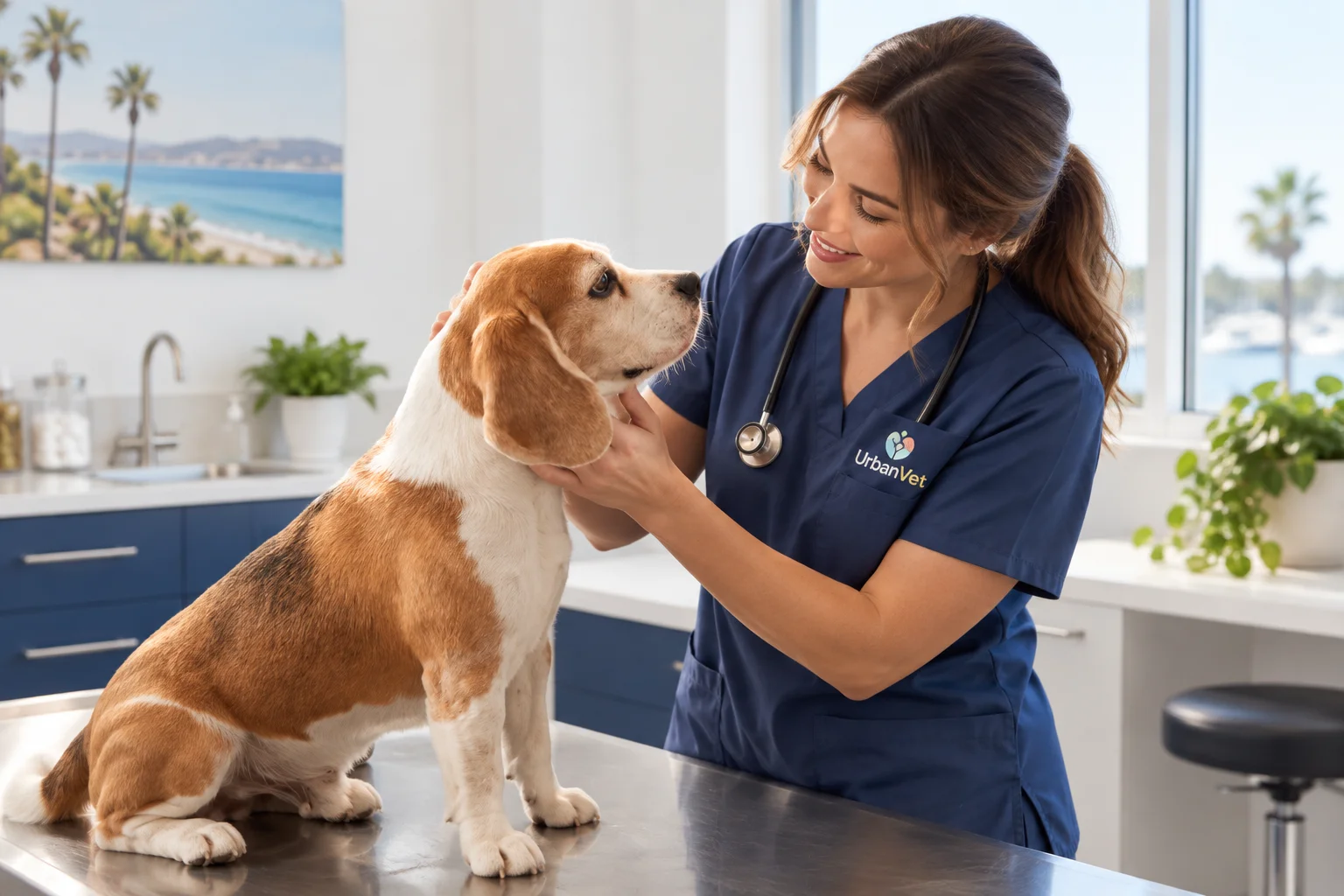
Dog vasectomy cost in Newport Beach depends less on a fixed number and more on which line items your dog actually needs: anesthesia, surgical time, pre-op bloodwork, and aftercare. At UrbanVet, our Pet Surgery team builds each quote around your dog's breed, size, and age rather than a single blanket price.
By Urban Vet Team, Veterinary Professionals
How Much Does a Dog Vasectomy Cost in Newport Beach?
Because every dog's anatomy and health history differ, dog vasectomy cost in Newport Beach is built line by line rather than quoted as one flat number. A vasectomy quote is really a sum of several separate pieces: the pre-surgical exam and bloodwork that confirm your dog is a safe anesthesia candidate, the anesthesia and monitoring used during the procedure itself, the surgeon's time in the operating room, pain management sent home with your dog, and a recheck visit to confirm healing. Some clinics bundle the recheck and take-home medication into the original quote; others bill them separately once your dog is examined in person. Neither approach is wrong, but it means two quotes that look different on paper can represent the same actual care. The most reliable way to compare options is to ask what is included in the number you're given, not just what the number is.
What Does a Canine Vasectomy Procedure Actually Include?
A canine vasectomy is a same-day surgical procedure performed under general anesthesia. Through a small incision near the scrotum, the vas deferens (the tube that carries sperm from the testicles) is located, cut, and sealed on each side. Unlike a neuter, the testicles themselves are left in place, so testosterone production continues normally after your dog heals. That distinction is what separates a vasectomy from a standard spay and neuter procedure: the surgery interrupts fertility without altering the hormonal system that drives growth, muscle development, and some behavior. Because the incision is smaller and the surgical field is more limited than a full neuter, anesthesia time is often shorter, one of several factors that can shift a quote in either direction depending on your dog's size and how well they tolerate sedation.
How Is a Dog Vasectomy Different From Neutering, and Which Costs More?
Neutering, technically called an orchiectomy, removes both testicles entirely, which stops testosterone production and eliminates certain hormone-driven behaviors and health risks, including testicular cancer. A vasectomy sterilizes a dog while leaving the testicles and hormone production intact, so behaviors and growth patterns tied to testosterone continue. Some veterinary research on large-breed dogs has raised questions about whether early loss of sex hormones affects growth plate closure and joint development, which is part of why owners of large or giant breeds sometimes ask about vasectomy as an alternative. On pricing, the two procedures often land closer together than expected, which is exactly why dog vasectomy cost in Newport Beach comparisons between the two rarely show a dramatic gap. Anesthesia, monitoring, and surgical time scale with your dog's size in both cases, and a smaller incision doesn't always translate into a meaningfully lower total once bloodwork and aftercare are added in. Which procedure costs more usually depends on your individual dog more than on the procedure name.
What Factors Change the Price of a Dog Vasectomy?
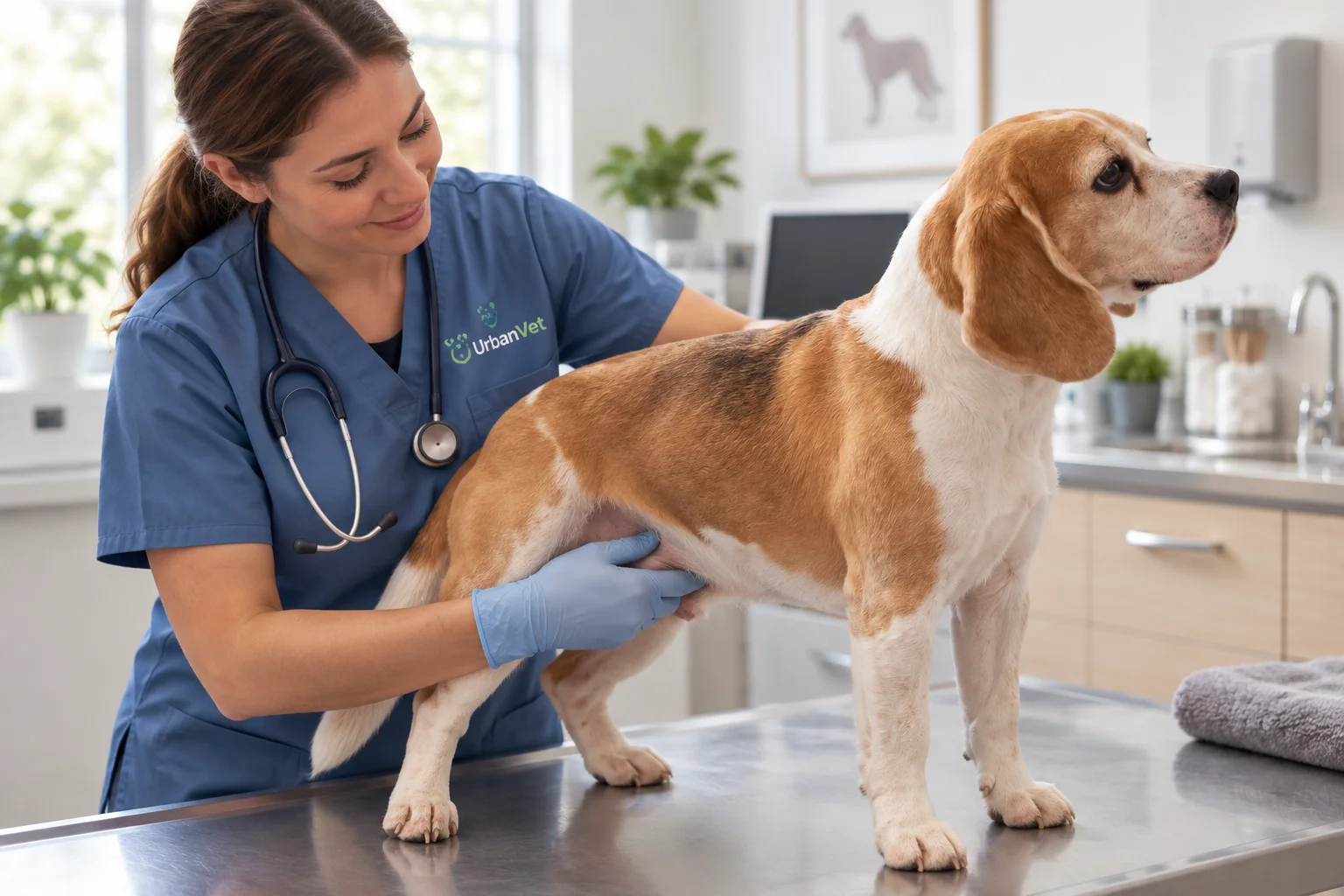
A handful of variables move each line item on a vasectomy quote up or down. Weight and size matter most directly: anesthesia is dosed by body weight, so a large-breed dog needs more drug volume and typically more monitoring time than a small dog, which raises that portion of the total. Breed matters separately from size. Brachycephalic breeds, dogs with short, flat faces like Bulldogs and Pugs, carry higher anesthesia risk and often need closer airway monitoring, which adds to the anesthesia and monitoring line rather than the surgery itself. Age plays a role too: an adult or senior dog may need additional pre-surgical bloodwork to confirm organ function is healthy enough for anesthesia, where a young, healthy dog may need only the standard baseline panel. One common surprise is a retained testicle, a condition called cryptorchidism where a testicle hasn't fully descended. It doesn't prevent a vasectomy, but it can add surgical time and complexity that a straightforward case wouldn't need, exactly the kind of variable worth asking about before your dog's exam.
What Does Recovery and Aftercare Look Like After a Dog Vasectomy, and Does It Add to the Cost?
Recovery from a vasectomy is generally shorter and more comfortable than recovery from a full neuter, since the incision is smaller and the testicles aren't removed. Most dogs wear a protective cone or recovery suit for about a week to ten days and need activity restricted, no running, jumping, or off-leash play, while the incision closes. Take-home pain medication is standard, and a short recheck visit confirms healing before your dog is cleared for normal activity. Whether these pieces add to your total or are already bundled into the original quote is exactly the kind of detail worth confirming up front. If your dog is already scheduled for elective sterilization, our Primary & Preventative Pet Care team can walk through a same-visit health screening and confirm which aftercare items are included, so nothing about the bill is a surprise on pickup day.
Where Can You Get a Dog Vasectomy Done in Newport Beach?
Not every general practice offers a vasectomy, since it's a more specialized technique than a standard neuter and fewer veterinarians are trained and comfortable performing it. When you're comparing Newport Beach options, ask whether the surgeon performing the procedure does vasectomies regularly, what anesthesia monitoring equipment is used during surgery, and whether the practice has an in-house recovery area where your dog is watched as sedation wears off. A clinic that can answer those questions specifically, rather than in general terms, is usually the one that has done enough of these procedures to price them accurately the first time.
Frequently Asked Questions
Is a dog vasectomy cheaper than neutering?
Not necessarily. The anesthesia, monitoring, and surgical time that make up most of the cost scale with your dog's size for both procedures, so totals often land close together. A vasectomy's smaller incision can shorten surgical time slightly, but that difference is usually modest once pre-surgical bloodwork and aftercare are factored in. The best way to know for your dog is to ask for an itemized quote for both options.
Does pet insurance cover a dog vasectomy?
It depends on your policy. Many pet insurance plans treat elective sterilization, including vasectomies and standard neuters, as a wellness item rather than an illness or injury, which means it's often covered only with a wellness rider or preventative care plan added on. Check your policy's definitions directly, or ask your insurer whether elective sterilization is included before your dog's appointment.
How long does a dog vasectomy procedure take?
A canine vasectomy is typically a shorter procedure than a full neuter, often completed in under an hour once your dog is under anesthesia, though exact timing depends on size, breed, and whether complications like a retained testicle are present. Most dogs go home the same day after a short monitored recovery period.
Is a dog vasectomy safe, and what are the risks?
When performed by an experienced veterinary surgeon, a dog vasectomy is generally considered a safe, low-risk procedure. As with any surgery involving general anesthesia, there is a small risk of an adverse anesthesia reaction, and standard surgical risks like bleeding or infection at the incision site apply. Pre-surgical bloodwork and in-house monitoring during the procedure are the main safeguards against these risks.
At what age can a dog get a vasectomy?
Most veterinarians recommend waiting until a dog's testicles have fully descended and puberty has begun, usually somewhere between five and twelve months depending on breed and size. Larger and giant breeds are often sterilized later than small breeds to allow more time for growth plate closure. Your dog's own timeline is best confirmed during an exam.
Get a Personalized Vasectomy Quote for Your Dog
Every dog's vasectomy quote looks different once bloodwork, anesthesia needs, and aftercare are factored in for their specific size, age, and breed, so the only way to see a real dog vasectomy cost in Newport Beach for your own dog is an in-person exam. Contact our Newport Beach team to schedule one and get an itemized quote built around your dog, not a generic estimate.