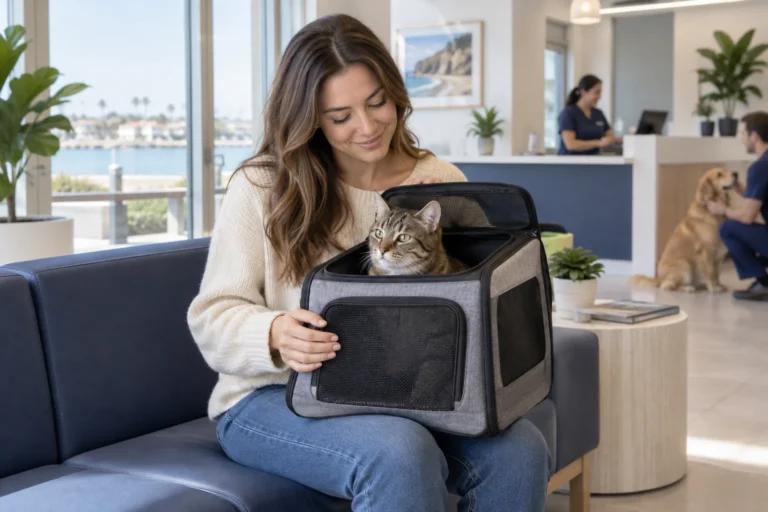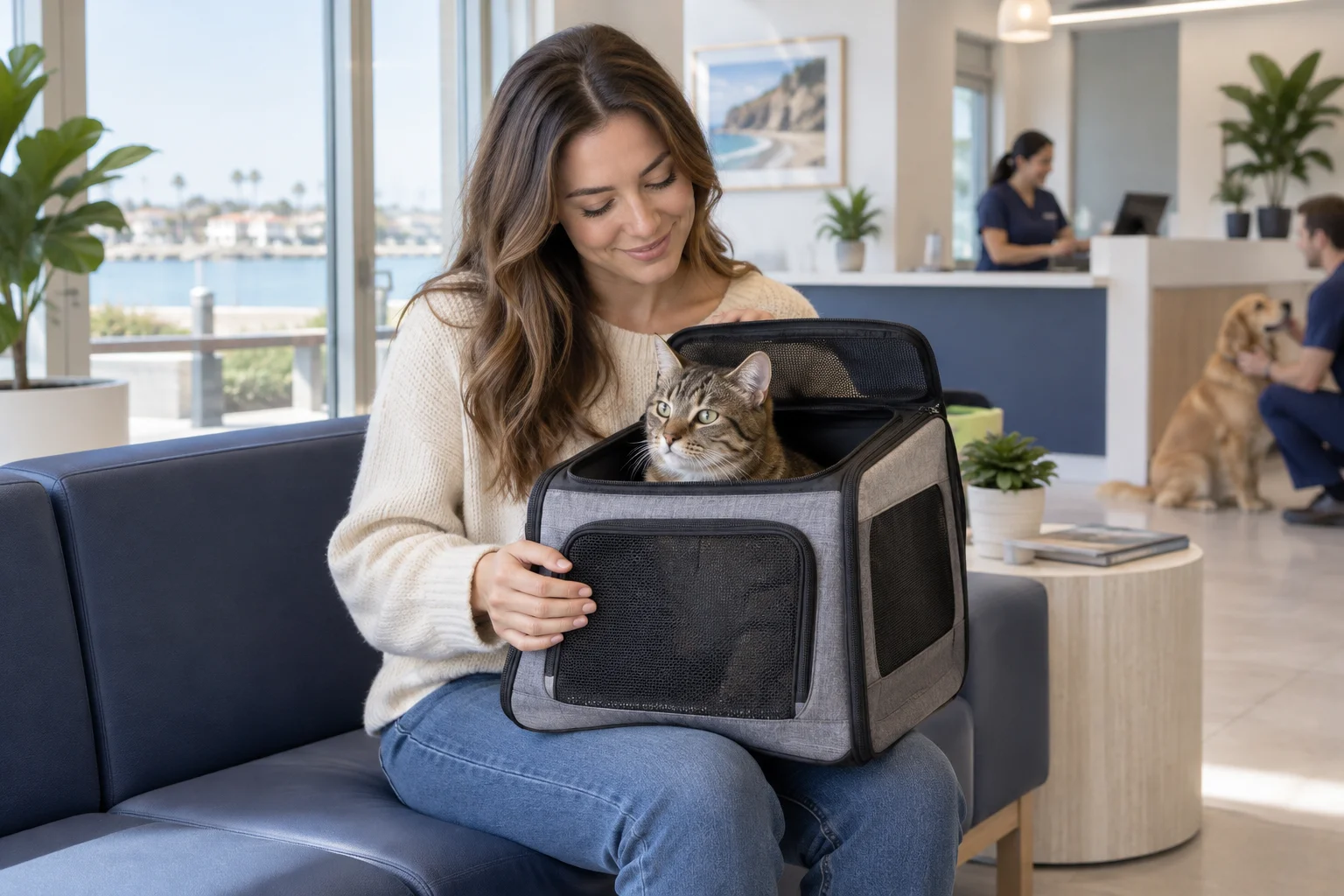
How to take a cat to the vet comes down to three things: a carrier your cat already trusts, a calm car ride, and a quiet plan for the exam room. Start days ahead, not the morning of. These steps from our primary & preventative pet care team make every vet visit less stressful.
By Dr. Raj Garhwal, DVM, Head Veterinarian and Medical Director, UrbanVet
How to Take a Cat to the Vet: What to Do Before the Appointment
Cats notice routine changes fast. A cat who sees the carrier only before vet visits learns that the carrier means trouble, so most of the prep is about changing what the carrier means. Book a time of day when your cat is usually relaxed. Jot down any behaviors you have noticed, such as changes in appetite, litter box habits or hiding, since these can be early signs of illnesses, so the team can cover it during the exam. Bring her records too, so the team can see which vaccinations are due.
How Early Should You Start Preparing a Cat for a Vet Visit?
In many cases, two to four weeks gives a nervous cat enough time, though even a few days helps.
Day-of-Visit Preparation
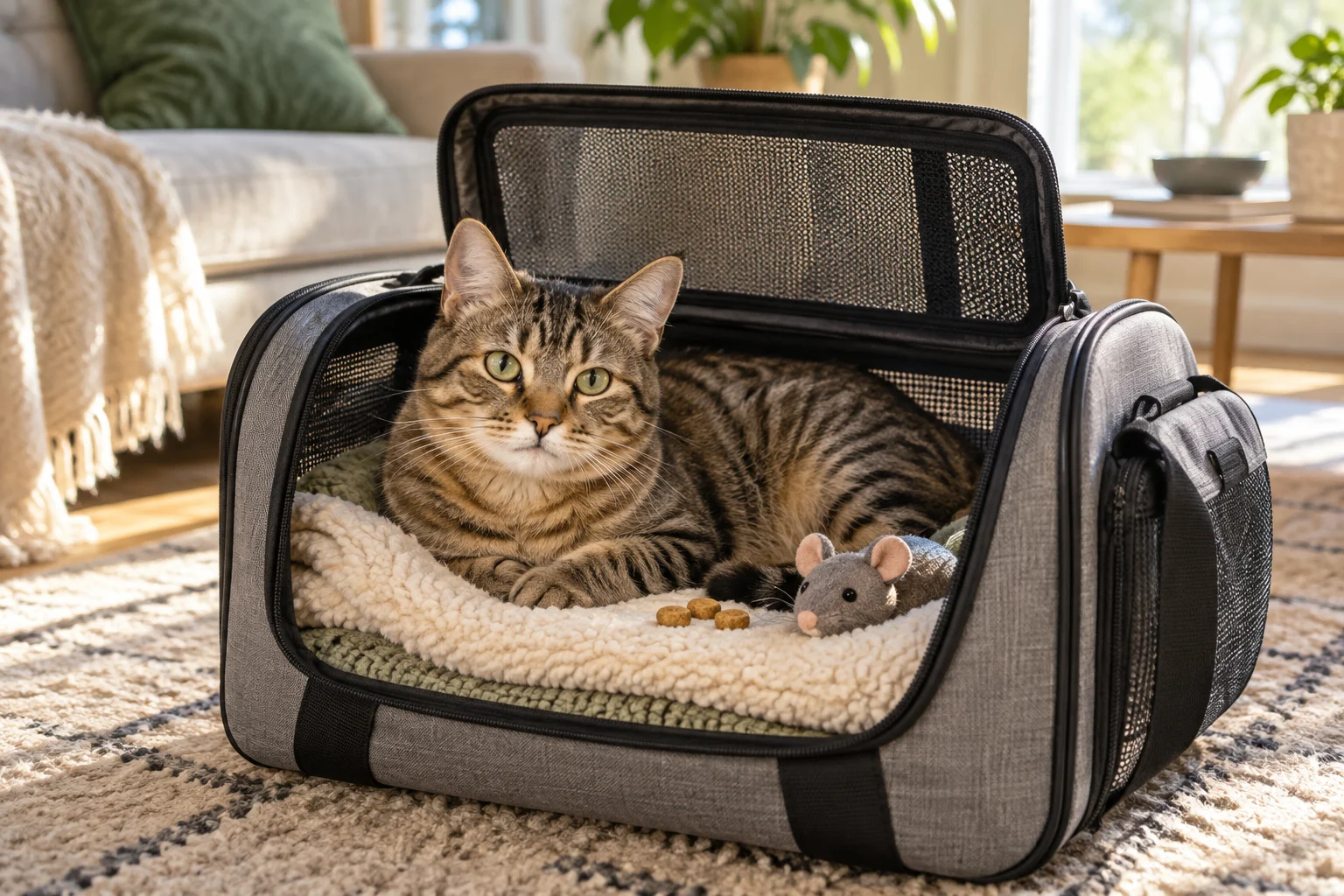
Keep morning routines normal and stay calm yourself, since even a relaxed kitty picks up on tension. Put a blanket that carries your home's scent inside the carrier, and pack favorite treats and any medication your cat takes. A familiar scent can help her settle once the door closes. Ask whether to skip the meal before travel, because some cats get carsick on longer trips. These day-of steps are part of how to take a cat to the vet without a scene.
Ask your veterinarian whether a pheromone spray is worth trying on the carrier bedding. Pheromones are chemical scent signals, and some sprays mimic them, though results vary from cat to cat. Apply sprays to the bedding, never to your cat, and follow the label.
Preparing the Carrier at Home
The carrier is the heart of how to take a cat to the vet. Choose a sturdy cat carrier with a top that lifts off or opens, so the veterinarian can examine your cat without pulling her out. Leave it out all year in a room she uses, and it can make a vet visit less stressful before you even leave the house.
What Is the Best Way of Getting a Cat into a Carrier?
Getting a cat into a carrier goes best when the cat walks in by choice. Place treats and a few toys inside the carrier and leave the door open. If you must place her, hold her against your chest and lower her in back end first through the top door. Chasing or forcing teaches her to hide next time.
How Does Cat Carrier Training Work?
Cat carrier training uses small steps that pair the carrier with something good:
- Leave the carrier open and drop in treats or toys.
- Feed meals next to it, then inside it.
- Close the door for a few seconds, then open it and reward her.
- Lift the carrier, walk across the room and set it down.
- Add short car trips around the block.
Move on only when your kitty stays relaxed at the current step. The goal is a carrier cat, one who treats the carrier as a safe den. Kittens usually learn fastest, so start carrier practice before their first vet visit.
How to Get a Cat to the Vet If They Hide When the Carrier Comes Out?
Close bedroom doors the night before so there are fewer hiding spots. Take the top off the carrier, ease your feline friend onto the soft bedding and replace the top. If she still hides, call the clinic and ask for advice instead of forcing it.
Safe Car Travel
What Helps With Calming a Cat in the Car?
Calming a cat in the car starts with blocking what scares her. Car rides bring noise, motion and unfamiliar smells, so drape a light towel over the carrier, keep the radio low and drive smoothly. In Newport Beach, never leave a cat in a parked car, even on a mild coastal day, because the cabin heats quickly.
How Do You Transport a Cat to the Vet Safely?
Buckle the carrier into the back seat or wedge it on the floor behind a front seat, away from front airbags. Latch the door and keep it closed until you are inside the clinic.
At the Veterinary Clinic
How Do You Keep a Cat Calm in the Exam Room?
To keep a cat calm, set the carrier on a chair, not the floor, and keep it covered in the waiting room. In the exam room, open the carrier and let her come out when she is ready. The veterinarian can examine her right on her familiar bedding. Ask which vaccinations or tests she needs this time. UrbanVet runs pet diagnostics including bloodwork, urinalysis, x-ray and CT in house, so those tests do not mean a second stop.
What to Do If My Cat Hates the Vet?
Many cats do, like most pets. Their anxieties usually build on memory: unfamiliar smells, other pets, being held. Hiding, flattened ears, wide pupils and hissing are common signs of anxiety in pets, and noting which behaviors appear helps the team plan the next visit.
Cat Sedative for Vet Visit Stress: When Is It Worth Asking About?
Ask when her anxieties run high at vet visits, such as when a cat has panicked, hurt herself or others, or been too stressed for a physical exam. After a physical exam, a veterinarian may prescribe medication to give before travel. Never give human medication or leftover pills, because many are dangerous for cats. Dosing comes only from the prescriber, so raise the question at least a few days ahead.
Common Mistakes and How to Tell It Worked
| Mistake | Why it backfires | Try instead |
|---|---|---|
| Pulling a hiding cat out | It confirms her fear | Remove the carrier top and lift her gently |
| Using the carrier only for vet trips | The carrier signals a vet visit | Put treats in it every week |
| Rushing out the door | Your tension spreads to her | Leave 15 minutes early |
You will know your plan for how to take a cat to the vet worked when she walks into the carrier alone, eats treats inside it, stays quiet on short car rides, and returns to her appetite and usual routines soon after a visit. If she still panics, tell the team.
Frequently Asked Questions
Should I take my cat to the vet?
Yes, for routine care and whenever behaviors change. Your veterinarian decides which vaccinations and tests suit your cat's age, lifestyle and health.
Can cats live without going to the vet?
Cats can get by for a time, but it is a gamble. Cats often hide illnesses until they are advanced, so a routine exam may catch problems earlier. Indoor cats still need routine vet visits.
How much does it cost to take a cat to the vet?
Cost depends on the reason for the visit. UrbanVet posts prices for its services on its Newport Beach pricing page. For anything not listed there, call the clinic at (949) 520-7440 before booking.
Plan a Calmer Vet Visit for Your Cat
Questions about preparing your feline friend or asking about medication before travel? Use the Contact page to reach UrbanVet's Newport Beach team and talk through the carrier, the car ride and the exam before you book.