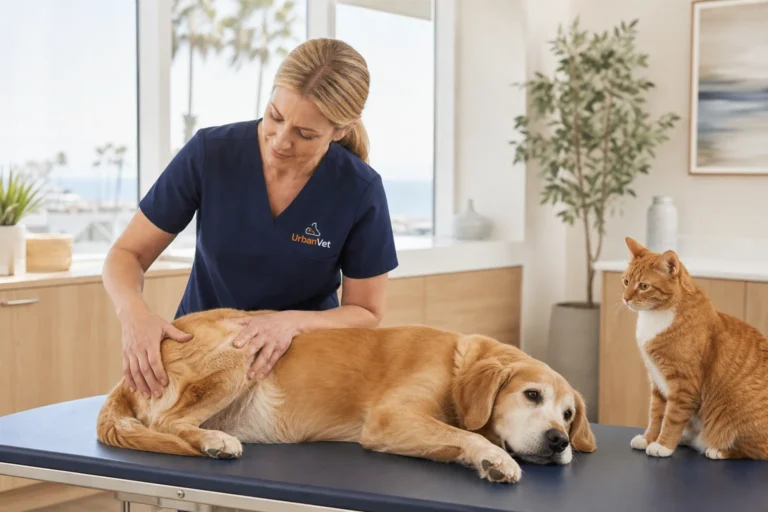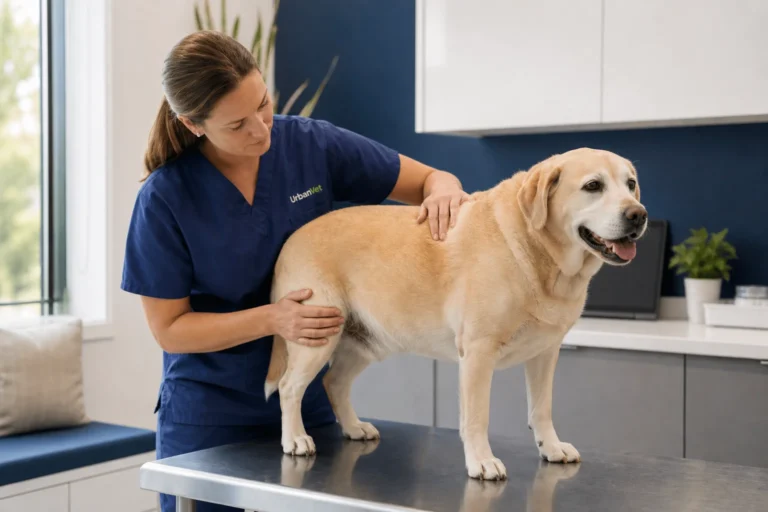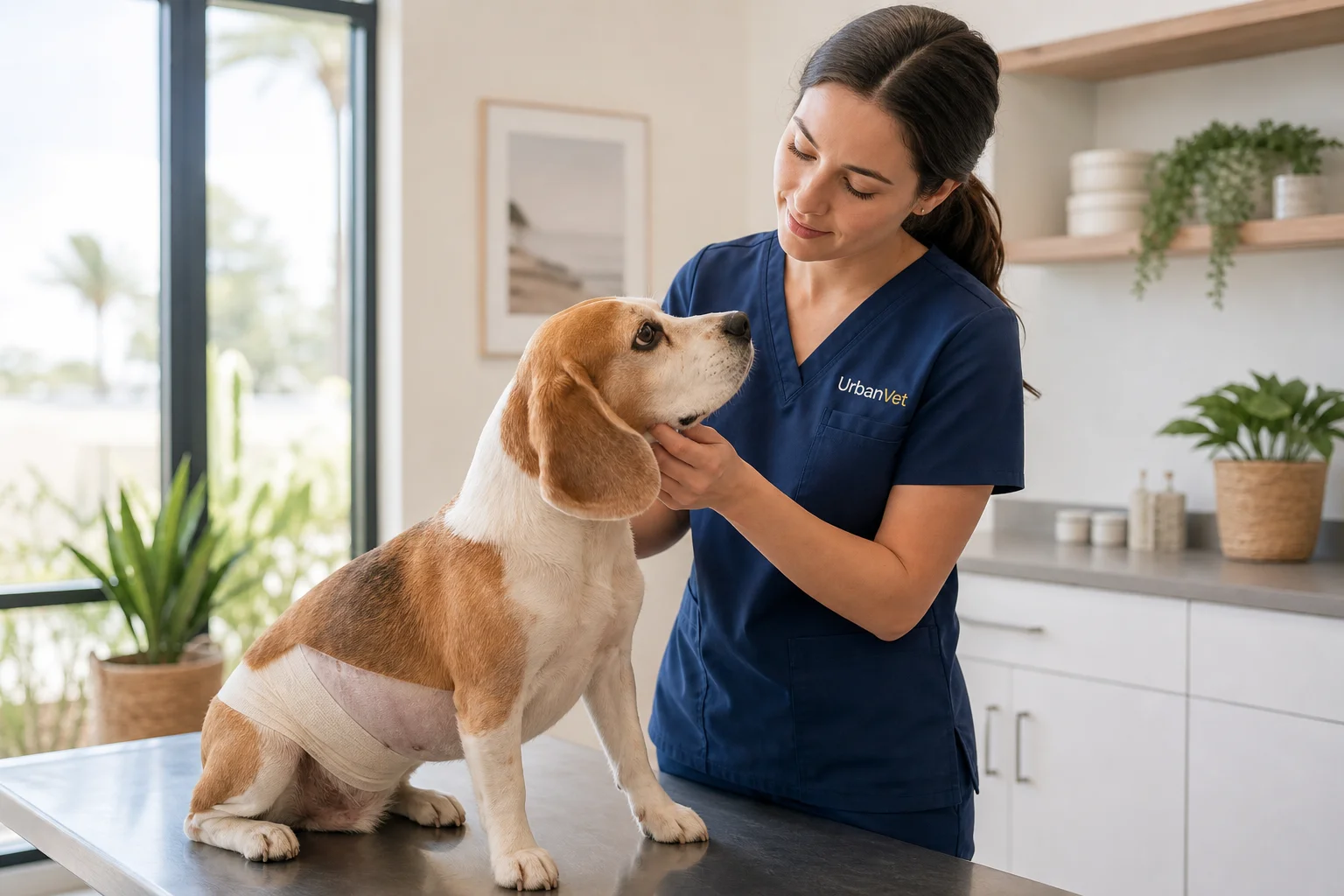
Most dogs move through spay recovery day by day in a predictable pattern: grogginess and rest for the first 48 hours, more energy through the first week, and a return to normal activity by day 10 to 14. This guide walks through that spay recovery timeline for traditional, laparoscopic, and ovary-sparing spays, a common form of Pet Surgery.
By Urban Vet Team, Veterinary Professionals
Spay Recovery Day by Day: What to Expect from Day 1 to Day 14
Because a spay is typically performed as day surgery, most dogs go home the same afternoon still groggy from anesthesia. The full dog spay recovery process usually runs 10 to 14 days for most pets, though the pace depends on the surgical technique and the individual dog.
Days 1 to 2: Rest and Grogginess
Expect low energy, some wobbliness, and reduced interest in food for the first 24 to 48 hours. A quiet, confined space away from stairs, other pets, and young kids helps prevent falls while sedation wears off. Pain medication prescribed at discharge should be given exactly as directed, and most dogs will want to sleep more than usual during this window.
Days 3 to 5: Appetite and Energy Return
Appetite typically normalizes by day 3, and many dogs start acting more like themselves: curious, a little restless, and eager for attention. This is often the hardest stretch of spay recovery, because the dog feels better than the healing incision actually is, which is exactly when jumping, running, or rough play needs to stay off the table.
Days 6 to 10: Internal Healing Continues
The skin may look closed and comfortable by now, but internal healing (the deeper tissue layers under the skin) is still ongoing. Short, leashed potty walks are usually fine, but normal activity, off-leash time, and repeated stairs should still wait until a vet confirms healing is on track.
Days 11 to 14: Recheck and Return to Normal Activity
Most traditional and laparoscopic spays are cleared for normal activity around day 10 to 14, following a recheck exam and, often, suture or staple removal if non-dissolvable material was used.
Traditional Spay Recovery vs Laparoscopic Spay Recovery: How the Timelines Compare
A traditional dog spay removes the ovaries and uterus through a single abdominal incision, and recovery generally follows the timeline above. Laparoscopic spay recovery uses two or three small incisions instead of one larger one, and many dogs are noticeably more comfortable in the first 48 to 72 hours because less tissue is disturbed to reach the ovaries.
Is laparoscopic spay recovery faster than traditional spay recovery? In the early days, often yes: dogs tend to move more normally and need less pain medication right after surgery. By the two-week mark, though, both techniques usually land in the same place, full incision healing and clearance for normal activity. The bigger early-week difference is comfort, not necessarily total recovery time.
How Ovary-Sparing Spay Recovery Differs From Traditional and Laparoscopic Spays
An ovary-sparing spay removes the uterus while leaving the ovaries in place, which some owners choose to preserve certain hormonal functions while still eliminating heat-related uterine risk. The incision and short-term recovery look similar to a traditional or laparoscopic spay: rest, a cone, limited activity, and a recheck around day 10 to 14.
The main difference shows up afterward rather than during recovery itself. Because the ovaries remain, a dog may still show heat-like behavioral signs periodically, even though she can no longer become pregnant. This is worth discussing before surgery, since it changes what to expect at home long after the incision has healed, and it's a key distinction from standard spay neuter procedures.
Warning Signs of a Spay Recovery Complication
Most dogs sail through spay recovery day by day without any issues, but knowing what is not normal matters. Call the clinic if any of these appear:
- Swelling, warmth, or a growing lump at the incision site
- Discharge that is yellow, green, or has an odor (a little clear fluid in the first day or two can be normal)
- The incision opening up, gapping, or any visible internal tissue
- Vomiting, diarrhea, or a complete refusal to eat beyond the first day
- Lethargy that gets worse instead of better after day 2 or 3
- A fever, or a dog that seems painful despite medication
If anything on this list shows up, Contact us right away rather than waiting for the scheduled recheck. Early attention to a spay recovery complication is almost always easier to manage than one caught late.
Getting Back to Walks, Play, and Normal Activity After a Spay
Short, leashed bathroom walks are typically fine within a day or two, but running, jumping, off-leash play, and rough play with other pets need to wait until the vet clears the incision, usually around day 10 to 14. Stairs are a common gray area: a dog that must use stairs to get outside can usually do so slowly and on leash, but repeated stair climbing for exercise or play should wait with everything else on the restricted list.
The instinct to let an energetic dog test things out once she feels good is understandable, and it's one of the most common causes of a delayed spay recovery timeline. Keeping activity boring and predictable for the full window protects the internal healing that isn't visible from the outside.
Caring for the Spay Incision at Home, and Stopping Licking or Chewing
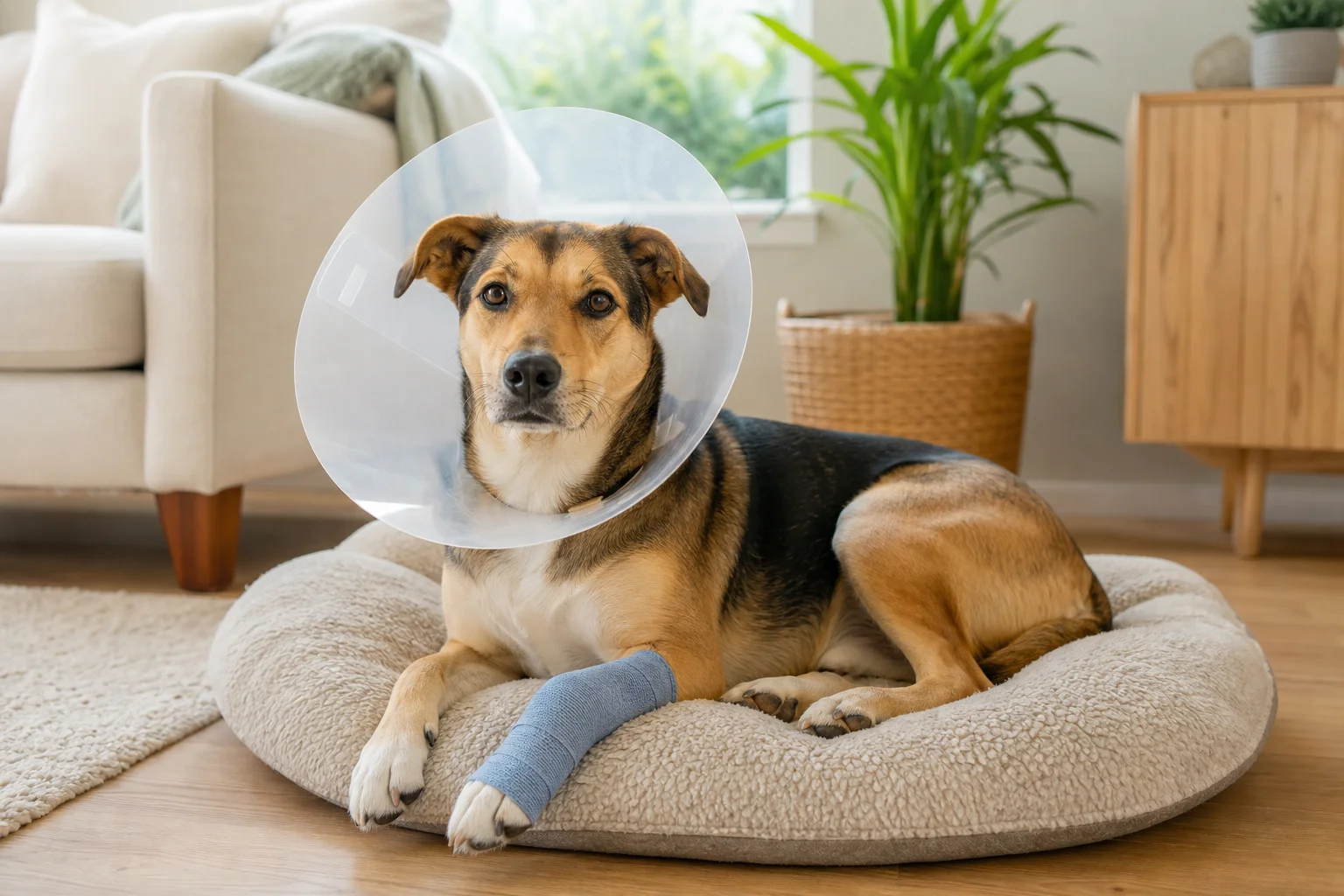
Check the incision once or twice a day for the warning signs above, keep it dry, and skip any ointments or home remedies unless a vet specifically recommends one. A properly fitted cone, or a comparable recovery suit, prevents licking, which is one of the fastest ways to turn a clean incision into an infected or reopened one.
If a dog manages to lick or chew at the incision before anyone notices, check it closely for redness, swelling, or an opening, and call the clinic the same day rather than waiting to see if it settles down. A few licks rarely cause damage, but sustained chewing can undo days of healing quickly.
Frequently Asked Questions
When should a dog go back to the vet for a spay recovery check?
Most clinics schedule a recheck 10 to 14 days after surgery to confirm the incision has healed and remove any non-dissolvable sutures or staples. Call sooner if you notice swelling, discharge, gapping, lethargy, or loss of appetite beyond the first day.
Can a dog go up and down stairs during spay recovery?
Occasional, slow, leashed stair use is usually fine if a dog needs it to get outside. Repeated stair climbing for exercise, or letting a dog run up and down stairs freely, should wait until normal activity is cleared, usually around day 10 to 14.
How long until a dog can be bathed after being spayed?
Most vets recommend waiting until the incision is fully healed and any sutures are removed, typically around 10 to 14 days, before a full bath. Until then, keep the incision area dry and wipe around it gently if needed rather than submerging it.
Does every dog need to wear a cone after being spayed?
Most dogs do best with a cone or a snug recovery suit for the full healing window, since even a calm dog may lick at the incision once the discomfort fades. A vet can advise on alternatives for dogs that tolerate a cone poorly.
How long does a spay incision take to fully heal?
The skin typically closes within 10 to 14 days, though the deeper internal tissue layers continue strengthening for several weeks after that. This is why activity restrictions extend a bit past the point where the incision looks healed.
Schedule Your Dog's Spay at Our Newport Beach Clinic
Whether it's a first consultation or a recheck during recovery, our team can walk through what to expect for your dog's specific procedure and timeline. Explore our Services to schedule a spay or a post-surgery visit.