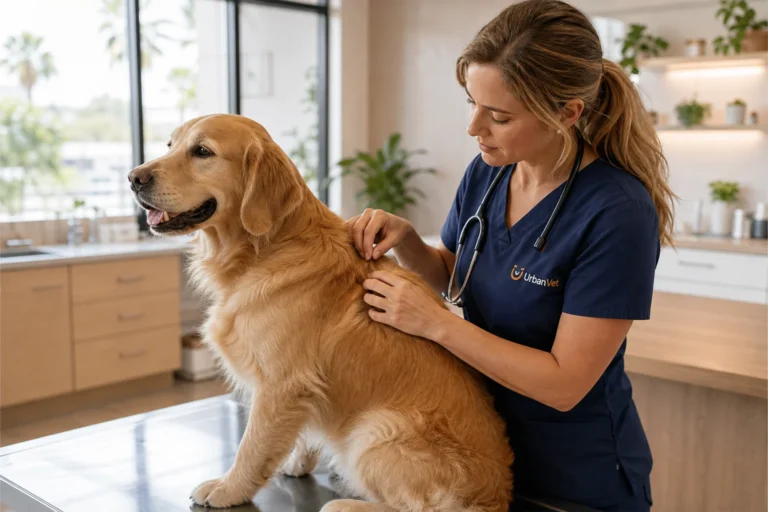
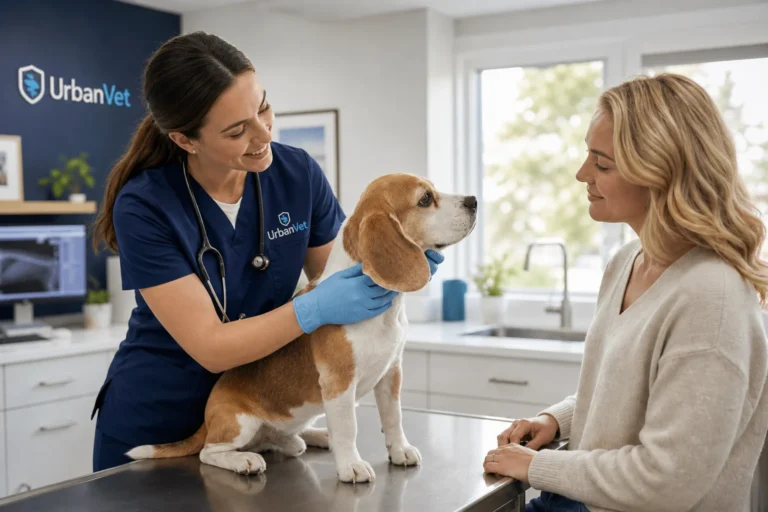
A raw diet for dogs and cats means feeding uncooked meat, bones, organs, and sometimes fruits or vegetables instead of processed kibble. Supporters say it mirrors ancestral eating patterns and improves coat health, digestion, and energy. Critics, including major veterinary organizations, point to real risks around bacterial contamination, nutritional imbalance, and bone hazards. The truth is more nuanced than either camp admits.
Published April 10, 2026 | Last Updated April 10, 2026 | Reviewed by the UrbanVet Team, Newport Beach Veterinarians
What Is a Raw Pet Food Diet?
Raw feeding goes by several names: BARF (Biologically Appropriate Raw Food or Bones and Raw Food), prey-model feeding, or simply "raw." At its core, it replaces commercially processed food with ingredients that haven't been cooked or heat-treated.
A typical raw diet for dogs might include:
- Raw muscle meat (chicken, beef, turkey, lamb)
- Raw meaty bones (chicken necks, wings, or recreational bones)
- Organ meats (liver, kidney, heart)
- Raw eggs
- Vegetables and fruits (optional, depending on the feeding model)
- Dairy such as plain yogurt or kefir (for some dogs)
Raw food diets for cats follow a similar framework, though cats are obligate carnibores with even stricter nutritional requirements. Cats need specific nutrients, including taurine and arachidonic acid, that must come from animal-based sources. This makes formulation precision critically important.
Why Pet Parents Choose Raw Feeding
The appeal is understandable. Pet parents who switch to raw often report improvements in their pet's coat shine, stool consistency, dental health, and energy levels. Some pets with chronic skin issues or food sensitivities respond well when highly processed ingredients or common allergens are removed from the diet.
The reasoning behind raw feeding draws on the idea that dogs and cats evolved eating whole prey, not kibble. While that's true at a biological level, there's an important distinction between what animals evolved eating in the wild and what constitutes an optimally formulated diet for domestic pets living long, healthy lives.
A raw diet can work well when it is carefully formulated, properly sourced, and prepared with food safety in mind. The problem is that most homemade raw diets fall short on at least one of those fronts.
The Real Risks: What Veterinary Organizations Say
The American Veterinary Medical Association (AVMA) and the U.S. Food and Drug Administration (FDA) have both raised formal concerns about raw pet food diets. These are not opinions; they are positions grounded in documented research and case studies.
Bacterial Contamination
Raw meat, by nature, carries bacteria. Salmonella, Listeria monocytogenes, Campylobacter, and E. coli have all been identified in commercially prepared raw pet foods during FDA testing and recalls. These pathogens can make pets sick, but they also pose a significant public health risk. Humans, especially children, elderly individuals, and immunocompromised people, can be exposed through handling raw food, cleaning food bowls, or contact with a pet that sheds bacteria in its stool.
The FDA has conducted multiple surveillance studies documenting pathogen contamination rates in raw pet food products, and the results consistently show higher contamination levels compared to conventional processed pet foods.
Nutritional Imbalance
This is one of the most underappreciated risks. A 2019 study published in the Journal of Nutritional Science analyzed 35 raw meat-based diets and found that the vast majority were nutritionally incomplete when measured against AAFCO (Association of American Feed Control Officials) standards. Too much of certain nutrients (phosphorus, vitamin A, vitamin D) and too little of others (calcium when bones are omitted, iodine, zinc) can cause long-term health problems that don't show up immediately but compound over time.
Puppies and kittens are especially vulnerable to nutritional imbalances during growth phases. Deficiencies in calcium and phosphorus ratios, for example, can lead to skeletal deformities.
Bone Hazards
Raw bones are often cited as safer than cooked bones, which can splinter dangerously. That's true. However, raw bones still carry risks: dental fractures, gastrointestinal obstruction, and internal lacerations are all documented complications, particularly in dogs who are aggressive chewers.
Is Raw Food for Cats Safe?
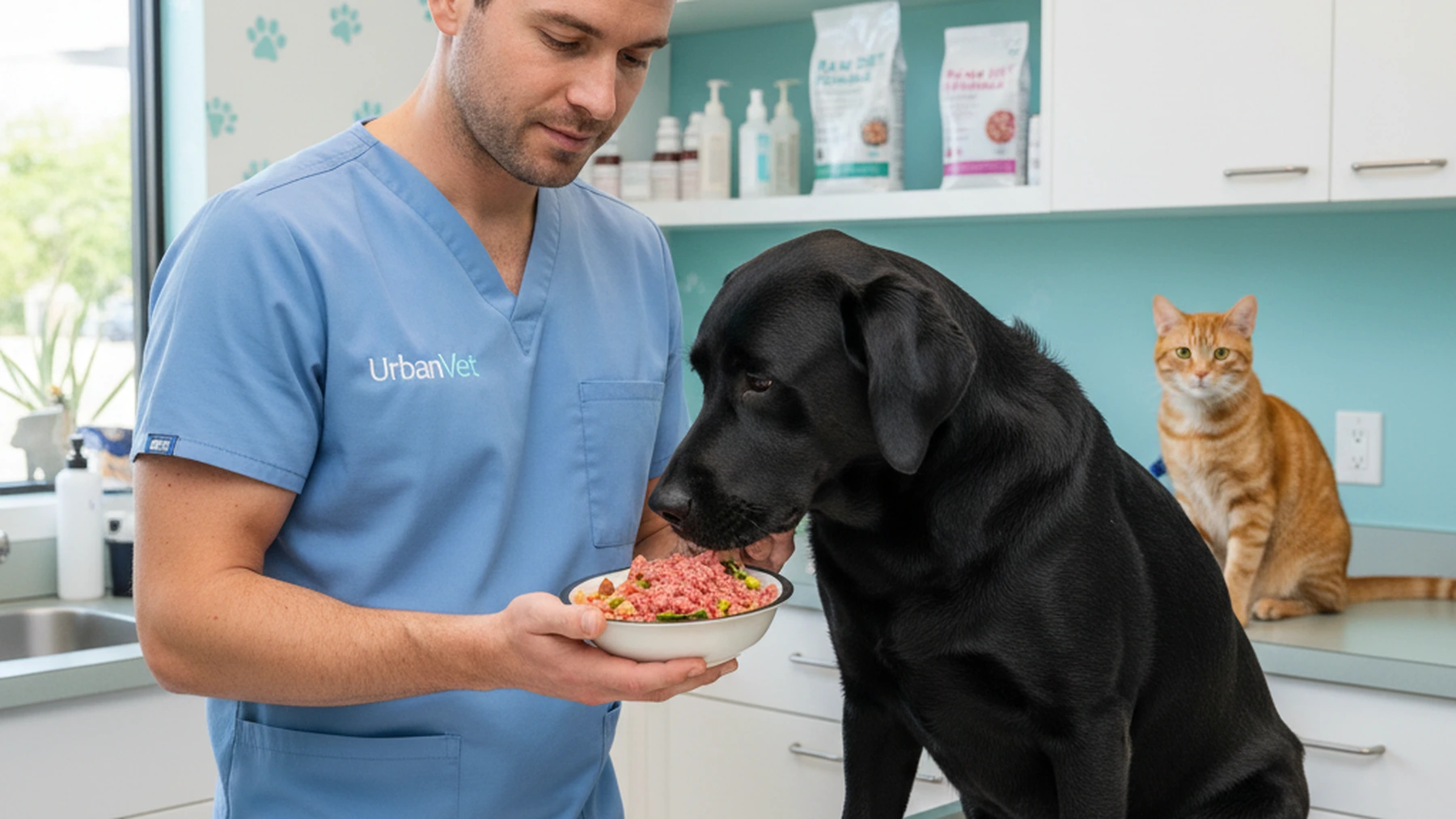
The question of whether raw food for cats is safe doesn't have a simple yes or no answer. Cats can do well on raw diets, but cats have some unique vulnerabilities that make formulation even more critical than for dogs.
Cats require taurine, an amino acid found in animal tissue, and deficiency causes dilated cardiomyopathy (DCM), a serious heart disease, and retinal degeneration leading to blindness. Unlike dogs, cats cannot synthesize taurine from precursor nutrients. If a homemade raw diet doesn't account for this, the consequences can be severe and irreversible.
Cats also require preformed vitamin A (retinol), which they cannot convert from beta-carotene the way humans and dogs can. Liver provides retinol, but too much liver creates vitamin A toxicity. Getting the balance right requires more than good intentions.
For cats, the risk-benefit calculation on raw feeding is similar to dogs but the margin for error is narrower. Working with a veterinarian or board-certified veterinary nutritionist before starting a raw diet is not optional; it's essential.
Commercially Prepared Raw vs. Homemade Raw
Not all raw diets carry equal risk. Commercially prepared raw pet foods that are formulated to AAFCO standards and tested for nutritional completeness provide better safeguards than most homemade recipes found online. Some commercial raw products also undergo high-pressure processing (HPP), a technique that reduces pathogen load without cooking the food.
However, even commercial raw products are subject to recall. The FDA's pet food recall database documents multiple raw pet food recalls related to Salmonella and Listeria contamination in recent years.
Homemade raw diets, unless formulated by a veterinary nutritionist and regularly tested, are the highest-risk category. Recipes shared on social media or in pet forums rarely account for the full nutritional profile your pet needs.
If you are committed to a homemade approach, a consultation with a board-certified veterinary nutritionist is the appropriate starting point, not the finishing step.
What to Do Before Switching Your Pet's Diet
Before making any significant dietary change, especially a shift as major as moving to a raw diet, a veterinary consultation is the right first move. Here's what that process should look like:
1. Baseline health assessment. A full physical exam, blood panel, and urinalysis gives you a clear picture of your pet's current health status. Some conditions (kidney disease, pancreatitis, immune suppression) make certain diets contraindicated.
2. Discussion of your pet's specific needs. Age, breed, activity level, reproductive status, and existing health conditions all factor into what the right diet looks like. A growing puppy has different needs than a seven-year-old spayed dog.
3. Nutritional formulation. If raw feeding is the direction you want to go, a vet or veterinary nutritionist can help formulate a diet that's complete and balanced, not just raw.
4. Safe handling protocol. Raw feeding requires strict food hygiene: separate prep surfaces, thorough hand washing, proper refrigeration, and careful handling of your pet's waste. Your vet can walk you through what this looks like in practice.
5. Monitoring and follow-up. Any new diet should be evaluated after 8 to 12 weeks with a follow-up exam and bloodwork to confirm your pet is thriving.
At UrbanVet in Newport Beach, pet nutrition consultations are part of our comprehensive primary and preventative pet care. We work with pet parents who want to make informed decisions about their animal's health, whatever dietary direction that leads.
A Balanced View: Neither All-In Nor Dismissive
The polarized debate around raw feeding doesn't serve pet parents well. On one side, raw feeding advocates can minimize documented safety risks and overstate the flaws of commercial food. On the other side, a reflexive dismissal of raw feeding ignores that some pets do respond well to less-processed diets, and that premium commercial foods vary widely in quality.
What your pet needs is not the diet that performs best on forums. It's the diet that fits their individual physiology, is nutritionally complete, is safe to handle, and is sustainable for your household. That looks different for every pet.
The best outcomes we see at UrbanVet come from pet parents who approach diet decisions the same way they approach any health decision: with curiosity, with an open mind, and with their veterinarian as a partner.
When to Contact Your Vet
Contact your veterinarian promptly if your pet shows any of the following signs after a dietary change:
- Vomiting or diarrhea lasting more than 24 hours
- Blood in stool or vomit
- Lethargy or sudden behavior changes
- Loss of appetite for more than 48 hours
- Signs of choking, gagging, or distress after eating bones
These can indicate anything from a simple digestive adjustment to a serious obstruction or infection. Early evaluation matters.
Talk to UrbanVet Before You Decide
If you're considering a raw diet for your dog or cat, or if you have questions about your pet's current nutrition, we're here to help. Our team at UrbanVet offers compassionate, science-grounded guidance for every stage of your pet's life.
Schedule a pet nutrition consultation with UrbanVet today. We're located at 1220 Bison Avenue A7, Newport Beach, CA 92660, and we're proud to be Newport Beach's full-service veterinary clinic for dogs and cats. Our full range of veterinary services is built around one goal: your pet's long-term health and happiness.
Frequently Asked Questions About Raw Diets for Dogs and Cats
Is a raw diet for dogs actually healthier than kibble?
A raw diet is not automatically healthier than high-quality commercial food. The outcome depends on whether the raw diet is nutritionally complete and properly balanced. Some dogs do well on raw; others thrive on premium kibble. The right diet depends on your dog's individual health profile, not a blanket rule. A veterinary nutrition consultation is the best way to find out what fits your specific pet.
Is raw food for cats safe to feed every day?
Raw food can be safe for cats when it is properly formulated to meet feline nutritional requirements, including taurine and vitamin A. However, the margin for error is narrow with cats because they are obligate carnivores with specific nutrient needs they cannot synthesize themselves. Daily feeding of a nutritionally incomplete raw diet poses real health risks over time. Always have a raw diet for cats reviewed by a veterinarian or veterinary nutritionist before making it the primary food source.
What are the biggest risks of raw feeding for pets?
The three most significant risks are bacterial contamination (Salmonella, Listeria, and E. coli in raw meat), nutritional imbalance (deficiencies or excesses that cause long-term health problems), and bone hazards (dental fractures and gastrointestinal injury from bone fragments). These risks can be managed but not eliminated entirely, which is why veterinary oversight is important.
Can I feed my puppy or kitten a raw diet?
Raw feeding during growth phases carries heightened risks because puppies and kittens are more susceptible to nutritional imbalances that affect bone development and organ function. If you want to feed raw to a growing animal, a formulation by a board-certified veterinary nutritionist is strongly recommended, not optional. A general recipe from the internet does not account for the specific calcium-to-phosphorus ratio and micronutrient needs of a growing pet.
What should I ask my vet at a pet nutrition consultation?
Ask about your pet's current health status and whether any conditions affect dietary choices, what nutritional standards a diet needs to meet, how to evaluate whether a commercial raw product is safe and complete, what food safety practices are required if you feed raw at home, and how to monitor for signs that a new diet isn't working. A good pet nutrition consultation gives you a clear, customized plan rather than general advice.
Written by the UrbanVet Team | Newport Beach Veterinarians
Published: April 10, 2026 | Last Updated: April 10, 2026
UrbanVet is a full-service veterinary clinic at 1220 Bison Avenue A7, Newport Beach, CA 92660. Our team provides primary and preventative care, surgery, dentistry, diagnostics, and virtual care for dogs and cats throughout Newport Beach and surrounding communities. All health content is reviewed by licensed veterinary professionals.