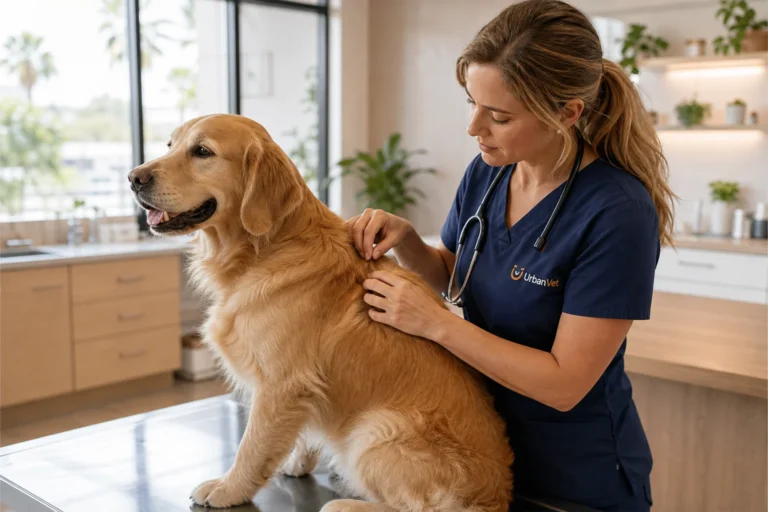
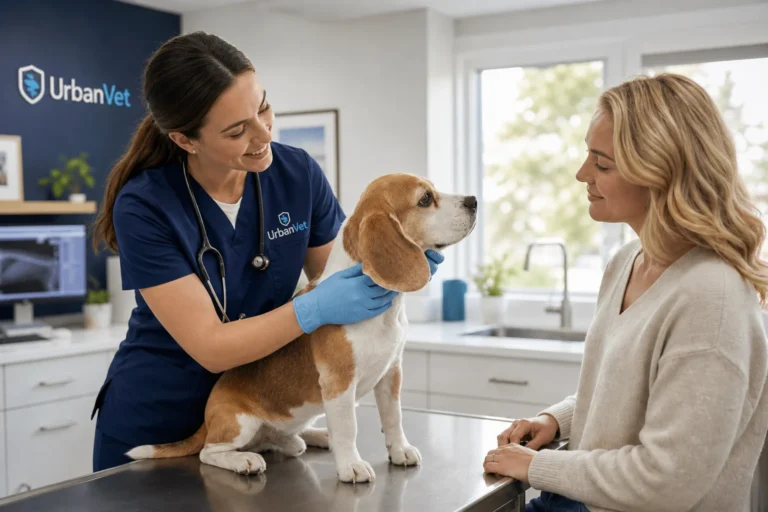
Annual wellness exams are one of the most important investments you can make in your pet's long-term health. Our Primary & Preventative Pet Care team at Urban Vet gives every pet a thorough physical exam, a structured risk assessment, and a preventive plan built for their life stage, so health changes are caught early and treated before they progress.
By Urban Vet Team, Veterinary Professionals
What Happens During Annual Wellness Exams
A comprehensive physical exam is the foundation of every wellness visit. From the moment your pet enters the exam room, your veterinarian is actively gathering information. Height, weight, body condition score, heart rate, respiratory rate, temperature, and blood pressure are all recorded, establishing a numerical baseline that makes future comparisons meaningful and precise.
Your care provider will also evaluate:
- Eyes, ears, and oral cavity
- Skin and coat quality
- Lymph nodes and abdominal organs
- Joint mobility and gait
- Neurological responsiveness
Each checkpoint gives your veterinarian a view into body systems that do not always show outward signs when they begin to fail. A subtle heart murmur, a small mass, or early-stage gum disease discovered at a routine physical exam is far easier to address than the same condition found months later when symptoms appear.
Why Annual Wellness Visits Matter More Than You Think
Pets age faster than people. A single calendar year represents roughly five to seven years of biological aging for most dogs and cats. Skipping the annual wellness exam is not the equivalent of a person postponing a routine checkup for twelve months. It is much closer to a human going five or more years without seeing a primary care provider.
According to AAHA Canine Life Stage Guidelines published in the Journal of the American Animal Hospital Association (Bartges et al., 2012), preventive care protocols that include routine physical exams and diagnostic screening improve early disease detection across life stages. Early detection almost always means more treatment options and better long-term outcomes for your pet.
Your pet cannot tell you when something feels wrong. The annual wellness exam is the primary tool your care provider uses to gather that information on your pet's behalf.
Key Vitals and Risk Factors Your Vet Evaluates
Every wellness visit starts with a structured risk assessment that extends beyond the physical exam findings alone. Your veterinarian considers breed-specific predispositions, age, diet, reproductive status, and lifestyle alongside the clinical data gathered during the appointment.
Blood Pressure
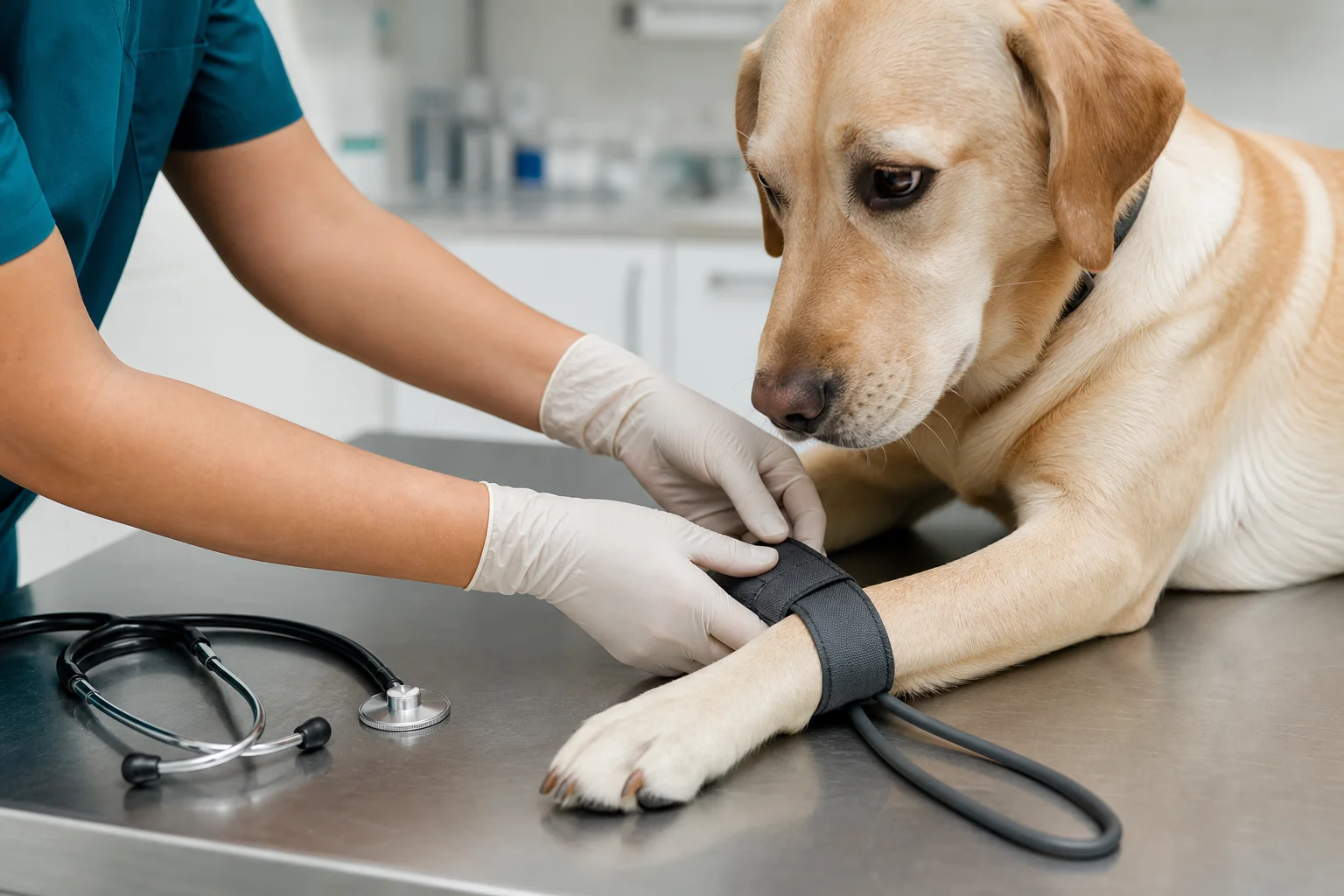
Elevated blood pressure, or hypertension, is common in older cats and dogs, particularly those with kidney or thyroid disease. Most affected pets show no outward symptoms until serious organ damage has occurred. Routine blood pressure screening during the annual wellness visit makes detection possible early enough for treatment to be most effective.
Height, Weight, and Body Condition
Height, weight, and body condition score are recorded at every visit. Tracking height weight over time allows your care provider to spot gradual trends before they become clinical problems. Obesity is one of the primary risk factors for arthritis, diabetes, cardiovascular strain, and shortened lifespan in companion animals.
Bloodwork and Urinalysis
A complete blood count and chemistry panel screen for anemia, infection, liver and kidney function, blood sugar, and thyroid health. For pets over seven years old, these panels are standard annual wellness protocol. For younger, healthy adults, your primary care provider recommends them based on individual risk profile.
Preventive Care Across Every Life Stage
Wellness exams are not one-size-fits-all. The priorities your veterinarian addresses shift meaningfully depending on where your pet is in life.
Puppies and kittens need core vaccine series, parasite prevention guidance, nutritional counseling, and early behavioral advice. These early wellness exams set the health foundation your pet carries into adulthood.
Adult pets benefit from steady annual wellness scheduling. The focus at this stage is maintaining healthy weight, catching early disease markers through bloodwork, and keeping dental health current.
Senior pets (generally dogs over seven and cats over ten) benefit from exams every six months. At this stage, the risk assessment expands to include joint health, cognitive function, blood pressure trends, and more detailed chemistry panels. Identifying early kidney disease or hyperthyroidism in a senior pet can meaningfully extend quality of life.
For California pet owners, parasite exposure is year-round, so prevention is not a seasonal decision the way it can be in colder climates. Your veterinarian can build a flea, tick, and heartworm prevention plan into your pet's wellness visit based on their individual risk and lifestyle.
What to Expect After Your Pet's Wellness Exam
At the close of the visit, your veterinarian walks you through every finding, explains what is within normal range, and outlines anything that warrants monitoring or follow-up. Recommended next steps may include advanced Pet Diagnostics, vaccine boosters, a dental cleaning referral, or dietary adjustments.
You leave with a clear summary of your pet's current health status and a preventive care plan built around their specific risk factors. If you are thinking ahead about veterinary costs, understanding your pet insurance options can help you compare coverage for both routine care and unexpected needs.
Knowing when to seek care right away versus scheduling a follow-up is also valuable, and learning to recognize emergency warning signs helps you act with confidence when it matters.
Frequently Asked Questions
How often should my pet have a wellness exam?
Most healthy adult dogs and cats benefit from one annual wellness exam per year. Puppies, kittens, senior pets, and those managing chronic conditions often benefit from visits every six months. Your primary care provider will recommend a schedule based on your pet's age, breed, and current health status.
What is the difference between a wellness visit and a sick visit?
A wellness visit is a proactive, scheduled physical exam designed to evaluate overall health and catch early disease. A sick visit addresses a specific symptom your pet is experiencing. Both include a thorough physical exam, but the annual wellness visit also encompasses a full risk assessment, preventive screenings, and a forward-looking health plan.
Can my pet skip a wellness exam if they seem healthy?
Looking healthy is not the same as being healthy. Elevated blood pressure, early kidney disease, and dental infection often produce no visible signs until they are well advanced. Annual wellness exams are the most consistent way to screen for these conditions while they are still straightforward to treat.
What should I bring to my pet's wellness appointment?
Bring a current list of medications and supplements, a stool sample if your veterinarian has requested one, prior vaccine records if this is a first visit, and any notes about changes in appetite, energy, thirst, or behavior you have noticed at home.
Does my pet need bloodwork at every annual wellness visit?
Bloodwork is strongly recommended annually for senior pets and those with known risk factors. For young, healthy adults, your primary care provider may suggest panels every one to two years. Having baseline values on file makes any future changes far more meaningful for your clinical team.
Schedule Your Pet's Annual Wellness Exam at Urban Vet
Consistent preventive care is the most reliable path to a long, healthy life for your companion. Our Newport Beach team is ready to build a wellness plan shaped around your pet's individual needs. Explore our full range of Services and schedule your pet's next wellness exam today.