Knowing how to read a pet food label helps you choose real nutrition over clever marketing, not just what sounds impressive on the front of the bag. Between guaranteed analysis panels, ingredient lists, and life stage claims, pet food labels can feel like a puzzle. This guide breaks down each section so you can choose with confidence as part of your pet's Primary & Preventative Pet Care.
By Urban Vet Team, Veterinary Professionals
Why Learning How to Read a Pet Food Label Matters for Your Pet
Walk down any pet food aisle and you will see bold claims: "premium," "natural," "vet recommended." None of those words are regulated the way the actual label content is. Learning how to read a pet food label lets you see past the marketing and evaluate what your dog or cat is really eating. The product name, ingredient list, guaranteed analysis, and nutritional adequacy statement are the sections that carry real, enforceable meaning. Everything else on the packaging is company messaging designed to sell.
For Newport Beach pet parents, this matters even more. Warm weather, active beach days, and long walks mean your pet's body is working hard, and the right nutrition supports that lifestyle at every life stage. A diet that looks impressive on the front of the bag but falls short on the back can quietly affect energy, coat condition, and long term health. Our veterinary Services include nutrition counseling so you never have to guess.
Start With the Product Name and Life Stage
The product name on a dog food or cat food label is regulated by strict naming rules set by the Association of American Feed Control Officials (AAFCO), the group most states rely on to define pet food standards. A product called "Chicken Dog Food" must contain a very high percentage of chicken, while "Chicken Dinner" or "Chicken Formula" only needs to meet a lower percentage. A product labeled "with Chicken" needs far less, and a "Chicken Flavor" product may contain only a trace amount that is detectable to your pet. The product name is a legal claim, not just a headline.
Right next to the product name, look for the life stage claim: growth, adult maintenance, or all life stages. This single word or phrase tells you whether the food is formulated for a puppy or kitten, an adult, or a pet at every life stage. Feeding a growth formula to a senior pet can create real nutritional gaps over time. Matching the life stage on the label to your pet's actual life stage is one of the simplest, highest impact decisions you make in the pet food aisle.
Decode the Ingredient List
Once you have confirmed the product name and life stage, move to the ingredient list. Ingredients are listed by weight, heaviest first, before cooking. That means the first few words on the ingredient list carry the most weight, literally. A named meat like chicken, beef, or salmon listed first is a good sign, though whole meats contain water weight that cooks out, so do not rule out a food just because a meat meal appears near the top instead.
Watch for ingredient splitting, a practice where a manufacturer breaks a single ingredient category, like corn, into several forms (corn meal, corn gluten, corn bran) so each one appears lower on the list even though the combined amount is significant. Reading the full ingredient list, not just the first three words, gives you a clearer picture of what you are actually feeding. If a word on the label is unfamiliar, look it up before you decide it is a red flag. If you are not sure whether an ingredient list matches what your pet actually needs, bring it up at your next appointment. Routine wellness exams are built for exactly that kind of question.
Understand the Guaranteed Analysis and Complete Balanced Nutrition Claim
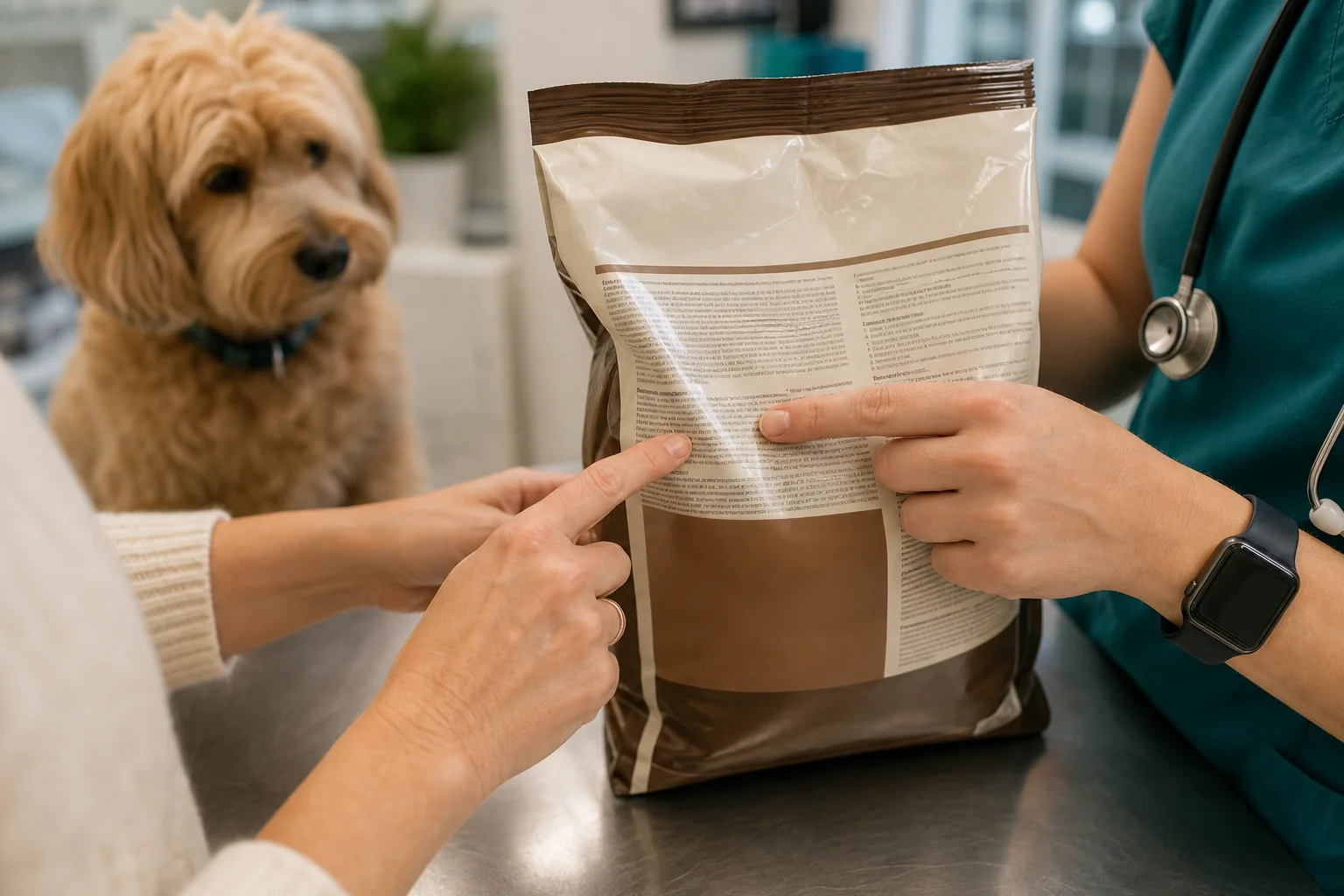
The guaranteed analysis is a small chart, usually near the ingredient list, showing minimum percentages of crude protein and crude fat, and maximum percentages of crude fiber and moisture. These are guarantees, not exact amounts, so two foods with the same guaranteed analysis can still have different actual nutrient content. Use the guaranteed analysis to compare foods in the same category, like two dry dog foods, rather than comparing a dry food to a canned one, since moisture content changes the numbers significantly.
Near the guaranteed analysis, look for the nutritional adequacy statement. This is the sentence that tells you whether the food is complete balanced nutrition for a specific life stage, and how that claim was verified, either through formulation to meet an established nutrient profile or through an AAFCO feeding trial. A bag that only claims to be "intended for intermittent or supplemental feeding" is not meant to be your pet's everyday diet. This single statement does more to confirm quality than any word on the front of the bag.
Who Regulates Pet Food Labels: FDA and AAFCO Rules
In the United States, pet food labels are overseen by more than one authority. The Food and Drug Administration (FDA) enforces the Federal Food, Drug, and Cosmetic Act, which requires that pet food be safe to eat, produced under sanitary conditions, free of harmful substances, and truthfully labeled. State feed control officials, guided by AAFCO's model regulations, enforce the more detailed labeling rules covering the product name, ingredient list, guaranteed analysis, and nutritional adequacy statement discussed above. Together, the Food Drug Administration and state AAFCO officials are why the words on a bag of pet food carry legal weight instead of just marketing weight.
This layered oversight is also why recalls and safety alerts move quickly once a problem is identified. As a pet owner, you can look up a company's compliance history before committing to a new food, particularly if you are switching your dog or cat to a new brand for the first time. Sudden vomiting or diarrhea after switching foods is usually mild, but it can occasionally signal something more serious. Knowing the emergency care signs to watch for helps you decide when a diet related reaction needs same day attention.
Reading a pet food label takes a few extra minutes, but it helps you understand what you are feeding. English language labeling rules mean every U.S. pet food label must be printed in plain language you can read at the shelf, not buried in fine print. If a claim's meaning is not clear, or a company will not explain what a particular ingredient means, that is a sign to ask more questions before you buy. Bring your pet's food label to your next visit so our team can compare options based on your pet's weight and health history, and recommend a better fit if the nutrient content falls short. Many owners add a supplement without realizing their base diet already meets the requirement, so a quick review with a business that focuses on veterinary nutrition can save you money.
Frequently Asked Questions
What is the first thing I should check on a pet food label?
The first step in how to read a pet food label is checking the product name and the life stage claim. The product name tells you the minimum amount of a named ingredient required by law, and the life stage claim tells you whether the food is formulated for growth, adult maintenance, or all life stages.
Why does the ingredient list matter more than the front of the bag?
The front of a dog food or cat food bag is marketing, not a regulated claim. The ingredient list, guaranteed analysis, and nutritional adequacy statement are the sections with real legal meaning. Ingredients are listed by weight, so reading the full list gives you a much clearer picture of the actual diet.
What does "complete balanced nutrition" mean on a label?
It means the food meets an established nutrient profile for a specific life stage, verified either through formulation or an AAFCO feeding trial. Look for this claim in the nutritional adequacy statement near the guaranteed analysis. Food labeled only for intermittent or supplemental feeding is not meant to be a complete everyday diet.
How do I know if a food matches my pet's life stage?
Check the life stage claim next to the product name: growth, adult maintenance, or all life stages. Puppies and kittens generally need growth formulas, healthy adults need adult maintenance, and senior pets often benefit from a vet recommended plan. Bringing the label to a wellness visit lets our team confirm the fit.
Can I trust words like "natural" or "premium" on pet food labels?
Those words are not strictly regulated the way the product name, ingredient list, and guaranteed analysis are. They can be accurate, but they are marketing language first. Verify quality using the ingredient list, guaranteed analysis, and nutritional adequacy statement, which carry actual legal requirements.
Bring Your Pet's Food Label to Your Next Newport Beach Visit
Our veterinary team is happy to review your dog or cat's current food label with you and answer any questions about ingredients, life stage needs, or switching diets. Contact our Newport Beach clinic to schedule a visit and get nutrition guidance built around your pet.