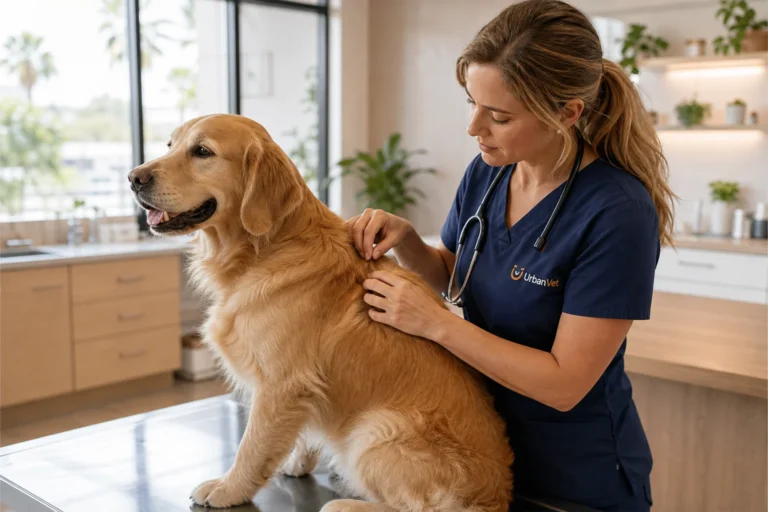
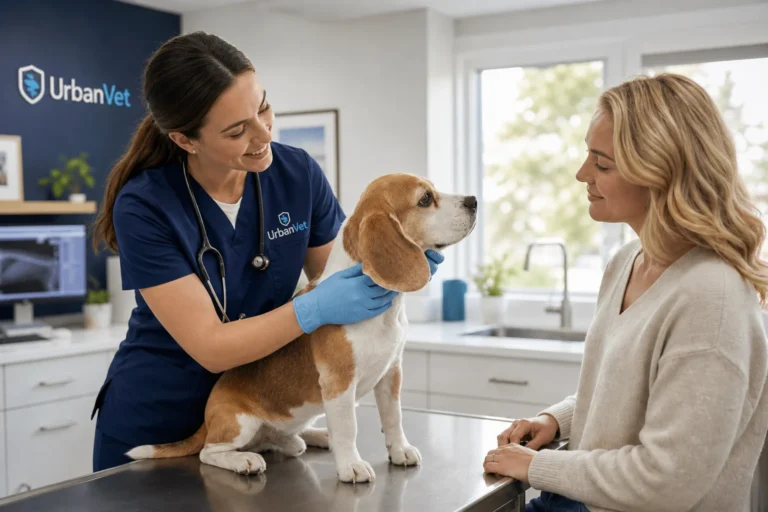
Common skin problems in dogs and cats affect nearly every pet at some point, from allergic reactions to bacterial infections. Left untreated, these skin issues can spiral into painful, chronic conditions. Our Primary & Preventative Pet Care team helps Newport Beach pet parents catch skin conditions early, before intense itching turns into something more serious.
By Urban Vet Team, Veterinary Professionals
Why Skin Conditions Are So Common in Dogs and Cats
Skin is your pet's largest organ, and it takes on constant exposure to allergens, parasites, weather, and bacteria every single day. That's why skin conditions remain one of the most common reasons dogs cats are brought in for veterinary care each year in our Newport Beach practice. Skin conditions form a broad group of diagnoses, ranging from mild seasonal flare-ups to chronic conditions that need ongoing management.
Take a case like Hudson, a three-year-old Labrador retriever who came into our clinic with red, inflamed patches along his belly and a coat that had gone dull and patchy. Within one visit, our team could see the pattern of a classic allergic reaction, but confirming the exact skin problem still required a closer look. Understanding these common skin problems dogs and cats face helps owners recognize the early warning signs and get help before a minor irritation turns into a painful, drawn out condition.
Recognizing the Signs: Hair Loss, Hot Spots, and Intense Itching
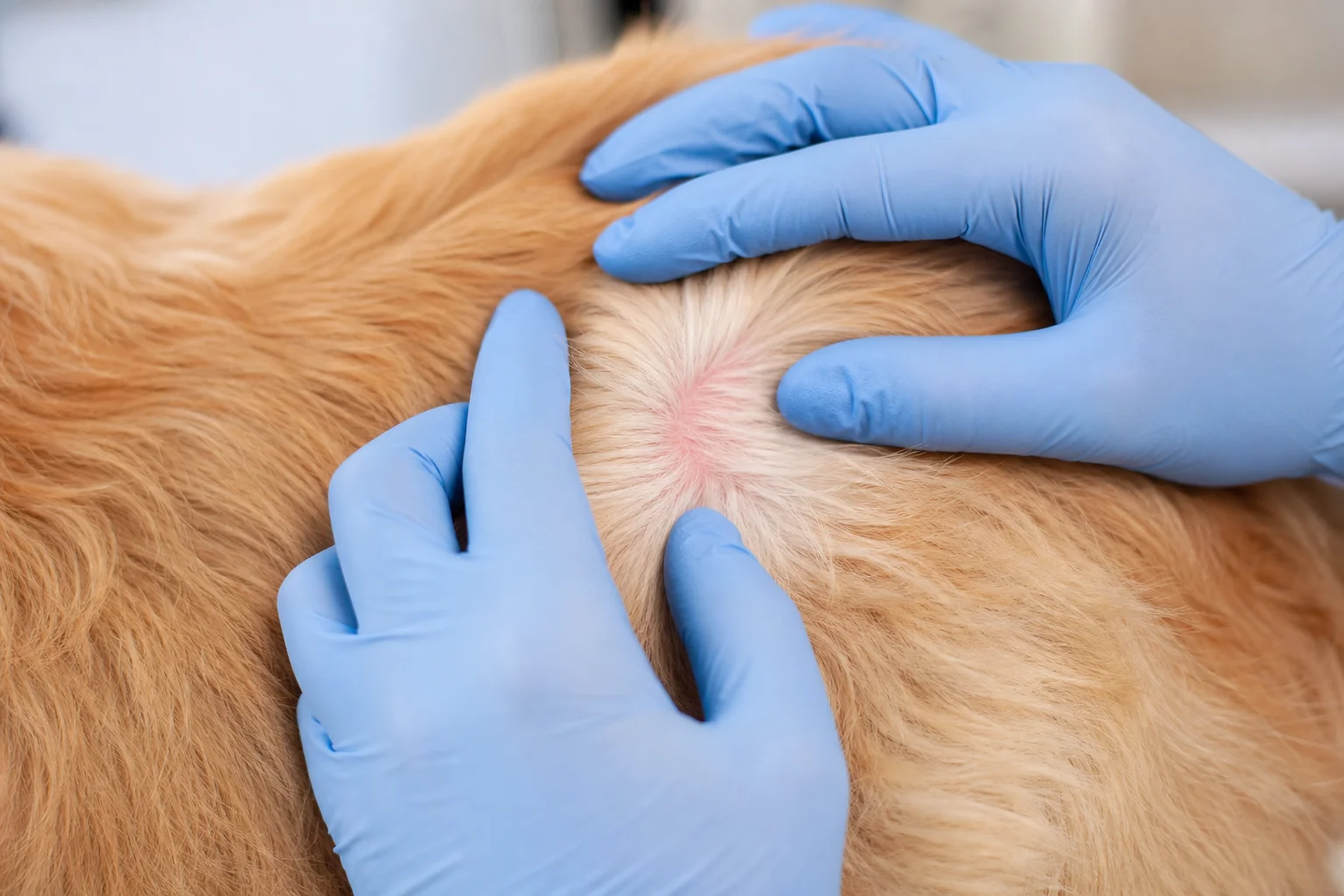
Hair loss, red or scabbed patches, and intense itching are usually the first clues that something is wrong with your pet's skin. Cats tend to over-groom an irritated spot until the fur disappears, while dogs are more likely to chew, lick, or scratch at one area until a raw hot spot develops. Other signs include flaky or greasy skin, a strong odor, recurring ear infections, or dark, thickened patches of skin on the belly and paws.
Hair loss, hot spots, and intense itching are among the skin problems dogs and cats commonly develop, and none of them should be brushed off as just a phase. What looks like a small irritation on Monday can become an open, infected wound by the weekend if the underlying cause, whether it's fleas, allergies, or a fungal infection, isn't addressed.
Common Skin Problems in Dogs and Cats: What Causes Them
Because common skin problems in dogs and cats often share overlapping symptoms, pinpointing the actual cause matters more than treating the surface level irritation. Environmental and food allergies are among the leading culprits, and some pets have an immune system that overreacts to harmless proteins or pollen, triggering chronic inflammation and itching. Fleas are another major trigger, since flea allergy dermatitis can cause a pet to scratch raw within hours of a single bite, and staying consistent with flea and tick prevention is one of the most effective ways to break that cycle for good.
Bacterial and fungal infections, including ringworm and yeast overgrowth, are common secondary problems that develop once the skin barrier is already compromised. Hormonal imbalances, like hypothyroidism in dogs, can also show up first as thinning fur or dull coat texture. Identifying the original trigger, rather than just the symptom, is what separates a quick fix from a treatment plan that actually holds.
How We Diagnose Skin Conditions
An accurate diagnosis starts with a hands on exam, but most skin problems need more than a visual check to confirm. Our Pet Diagnostics team may run skin scrapings, cytology, fungal cultures, or bloodwork, and results retrieved from these tests often point to a cause that isn't obvious from the outside. Allergy testing can narrow down specific food or environmental triggers so the treatment plan targets the actual problem instead of managing symptoms indefinitely.
Staying consistent with routine wellness checkups also helps us catch skin changes while they're still minor, since a vet who sees your pet regularly is more likely to notice a new patch, odor, or texture change before it becomes a bigger problem. As new results come in, your vet may edit the treatment plan to reflect exactly what's driving your pet's symptoms.
Treatment Options That Actually Work
Treatment depends entirely on the underlying skin problem. Bacterial infections typically call for antibiotics, while fungal infections need antifungal medication or medicated, fragrance free shampoo. Allergy driven skin issues often respond well to a combination of dietary trials, omega-3 supplements, and in some cases, prescription allergy medication or immunotherapy built around your pet's specific triggers. Keeping pets flea free year round also prevents a huge share of hot spots and secondary infections before they start.
We often recommend keeping a phone photo album of the affected area so you and your vet can track how the skin is responding between visits. If a hot spot spreads quickly, your pet seems unusually uncomfortable, or a wound looks infected, it's worth treating as urgent rather than waiting on a scheduled appointment. Our emergency pet care team can help you decide whether it's safe to wait or worth coming in right away.
Frequently Asked Questions
What are the most common skin problems in dogs and cats?
The most common skin problems in dogs and cats include allergic dermatitis, hot spots, ringworm, mange, and bacterial or yeast infections. Allergies, whether to food, fleas, or environmental triggers like pollen, are usually the underlying cause. Because symptoms often overlap, a veterinary exam and sometimes diagnostic testing are needed to identify the exact skin condition and start effective treatment.
Why is my dog or cat losing hair?
Hair loss can result from allergies, parasites, hormonal imbalances, stress, or infections. In some cases, a pet compulsively licks or scratches one area until the fur thins out completely. Bloodwork, skin scrapings, or allergy testing usually help pinpoint the cause so we can recommend a treatment plan suited to your pet's specific triggers.
How do vets diagnose skin issues in pets?
We start with a physical exam, then may run skin cytology, scrapings, fungal cultures, or bloodwork depending on what we find. Allergy testing can identify specific environmental or food triggers. These diagnostics let us treat the actual cause of your pet's skin problem instead of just masking the symptoms with short term relief.
Can skin problems in pets be prevented?
Not every skin condition is preventable, but consistent flea and tick prevention, a balanced diet, regular grooming, and prompt attention to itching or redness go a long way. Routine wellness visits also help us catch subtle changes in your pet's skin and coat before they turn into bigger, more painful problems.
Get Your Pet's Skin Checked in Newport Beach
If your dog or cat is dealing with hair loss, hot spots, or skin that just doesn't look right, don't wait for it to get worse. Contact our Newport Beach team today to schedule an exam and get a treatment plan built around your pet's needs.