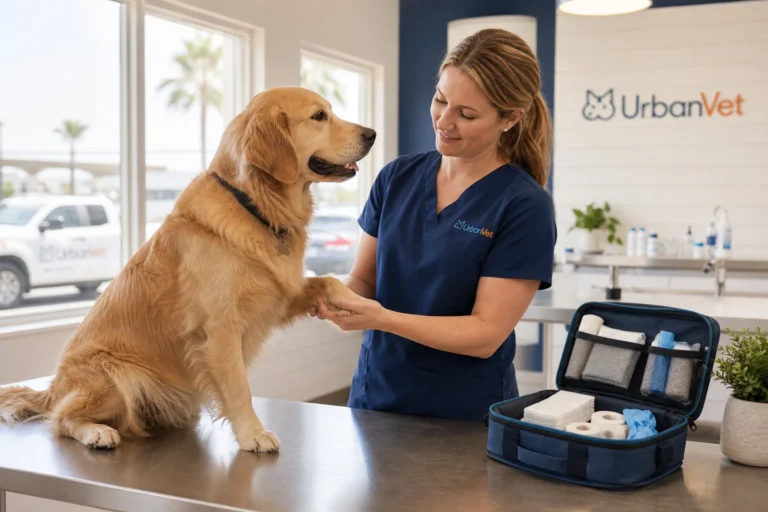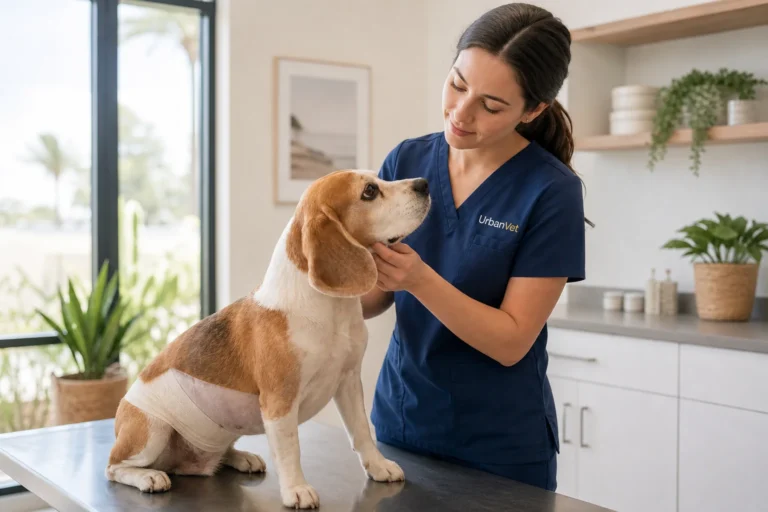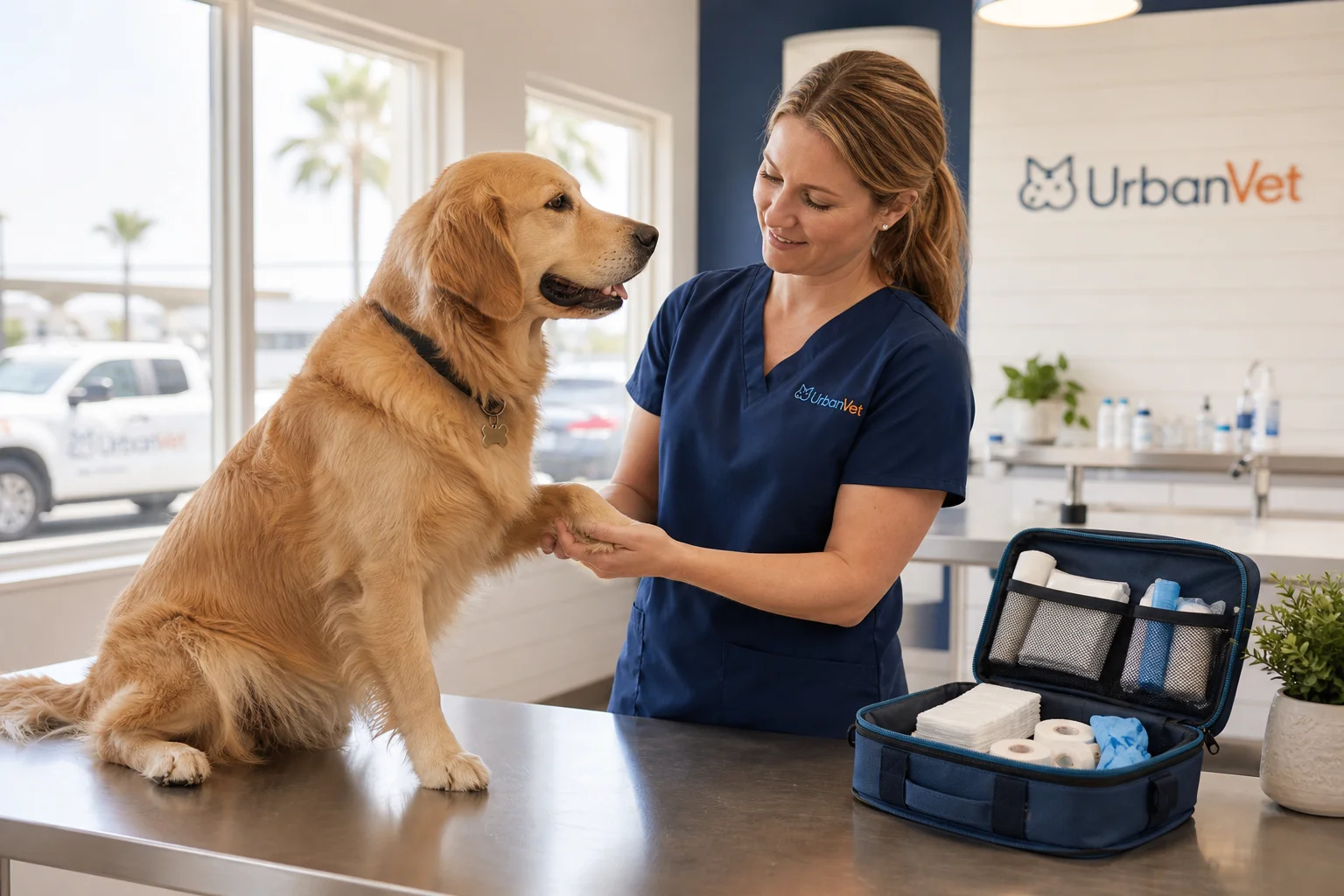
A stocked first aid kit and a calm head can turn a scary moment into a manageable one. These pet first aid essentials every Newport Beach pet owner should know cover the supplies, skills, and warning signs that keep dogs and cats safe at the beach and at home. Our Services team is ready when you need more.
By Urban Vet Team, Veterinary Professionals
Newport Beach living means sandy paws, salty air, and long days outdoors with your dog or cat. That lifestyle is wonderful for pets, but it also raises the odds of small cuts, stings, overheating, or an upset stomach during a beach afternoon. That is exactly why we put together pet first aid essentials every Newport Beach pet owner should know, a practical checklist you can act on today rather than during an emergency. This guide is not a substitute for professional advice from your veterinarian, but it gives pet owners a clear starting point.
Pet first aid is not a replacement for veterinary care, but it is the bridge between an injury happening and getting your pet safely into a clinic. Knowing the basics gives pet owners the confidence to act fast instead of freezing up. It can stabilize a minor wound, cool down an overheated dog, or calm a startled cat long enough for transport. It cannot replace diagnostics, sutures, or medication only a licensed veterinarian can provide. For ongoing wellness checks and preventive screenings that catch problems before they become emergencies, our Primary & Preventative Pet Care team builds a plan around your pet's specific needs.
Why Preparation Matters in a Coastal Community
Between the harbor, the off leash trails, and long stretches of pet-friendly beaches, Newport Beach pets spend more time outdoors than pets in most parts of the world. That means more exposure to hot pavement, foxtails, sharp shells, and the occasional coyote sighting on a canyon trail. None of that should keep you and your dog or cat home. It just means a little planning goes a long way, and pet owners who know their kit and their pet's normal behavior spot problems faster than owners who don't.
Building a Pet First Aid Kit That Covers the Basics
Every household with a dog or cat benefits from one dedicated, clearly labeled first aid kit kept somewhere easy to grab, plus a smaller version for the car or beach bag. A well-built pet first aid kit does not need to be complicated, but it does need the right components on hand before an emergency, not during one.
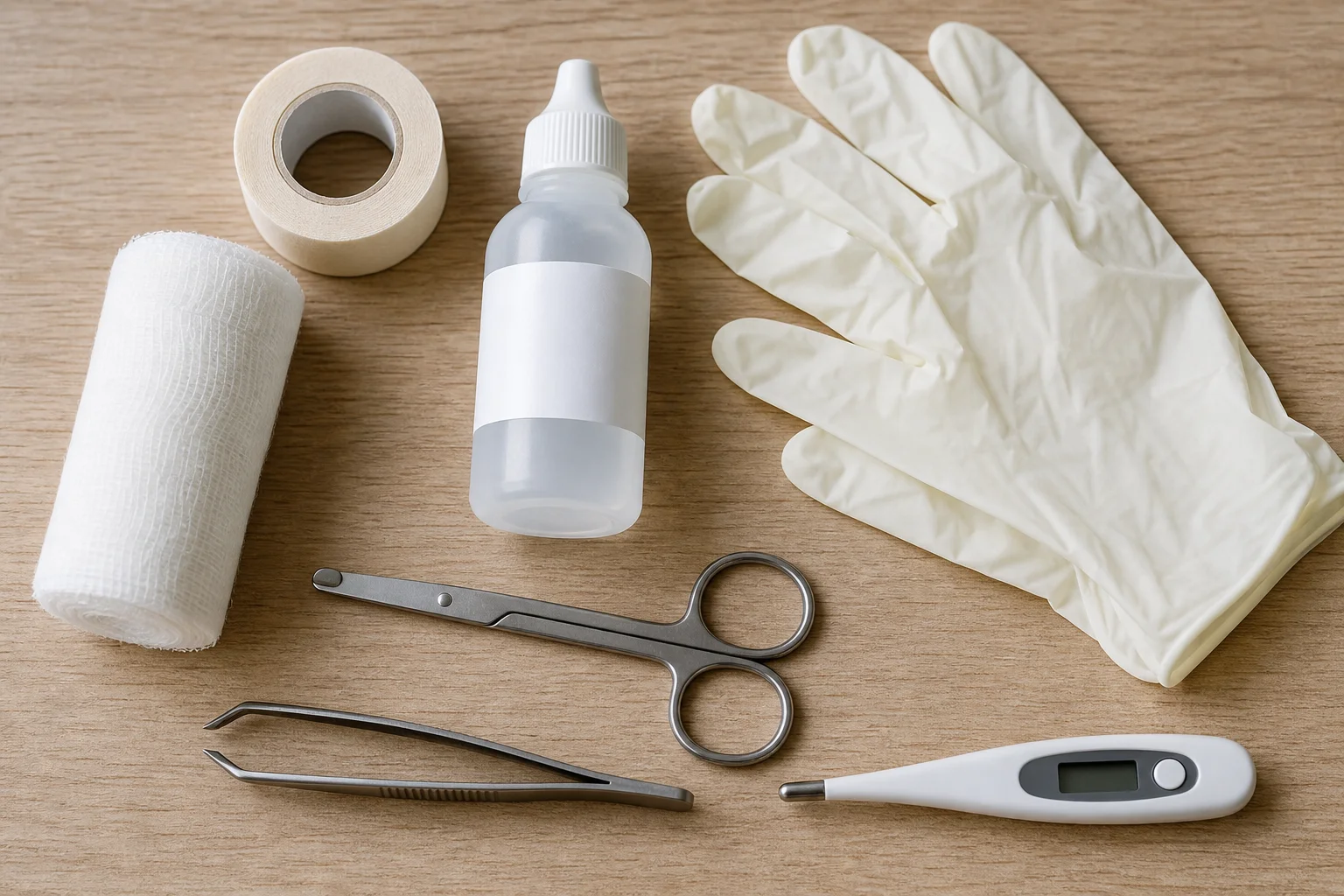
Core supplies worth stocking:
- Sterile gauze pads and rolled gauze for wound coverage
- Adhesive tape to secure bandages without pulling fur
- Saline solution to flush debris, sand, or irritants from eyes and wounds
- Disposable gloves to protect both you and your pet during treatment
- Blunt tip scissors and tweezers for trimming fur or removing splinters
- A digital thermometer, since a dog's or cat's normal temperature runs higher than a human's
- A muzzle or soft cloth, even for gentle pets, since pain changes behavior
- Cotton balls, antiseptic wipes, and a pet safe antibiotic ointment
- A card with your vet's number, the nearest emergency clinic, and pet poison control, kept somewhere for quick view
Where to Keep Your Kit
A single kit sitting in a hallway closet does no good if the emergency happens on a hike or during a beach afternoon. Keep one full kit at home, a compact version in the car, and a small pouch in your beach bag with just the essentials: saline solution, gauze, and adhesive tape. Check expiration dates on ointments and medications each season, and swap out anything that looks worn or used up so the kit is always ready, not just present.
Restocking is easy in Newport Beach. Most local pet supply stores and pharmacies offer curbside pickup, so replacing saline solution or adhesive tape after you use it doesn't mean losing a whole afternoon. Fine-point tweezers or a dedicated tick removal tool are worth adding to that kit as well, since they let you remove an embedded tick fully instead of leaving the head behind. Keep those tools in the kit year round instead of packing them away after summer, ticks do not fully disappear just because the weather cools.
Beach Day Safety and Common Newport Beach Injuries
Pets who split their time between sand and sidewalk face a specific set of risks. Hot sand and asphalt can burn paw pads in minutes during summer months, jellyfish and stingrays leave painful welts, and saltwater ingestion can cause vomiting or dangerous sodium imbalances if a dog drinks too much while playing in the surf.
If you notice limping after a beach day, check paw pads for redness, blistering, or embedded sand, then rinse gently with saline solution before applying a light wrap. For jellyfish stings, rinse the area with saltwater, not fresh water, and avoid rubbing, then monitor for swelling or breathing changes. Pack food, water bowls, and shade for every outing, dehydration and heat exhaustion move faster in pets than most owners expect, and catching heavy panting, drooling, or wobbliness early makes the difference between a quick recovery and a real emergency. Our summer heat safety guide goes deeper into hydration schedules and warning signs specific to hot, coastal days.
Paw Pad and Heat Protection
Before any beach or pavement walk, press the back of your hand to the sand or asphalt for five seconds. If it's too hot for your hand, it's too hot for your dog's paws. Protective booties help on the hottest days, and a quick rinse of the paws afterward removes salt, sand, and any hidden splinters or shell fragments lodged between the toes. Cats exploring a patio or balcony benefit from the same check before they're allowed to wander on a warm afternoon.
Even the most pet-friendly beaches in Newport Beach carry some risk, so a quick check of your pet's paws, ears, and coat after every outing catches small problems while they're still small.
Recognizing When Basic First Aid Isn't Enough
First aid buys time, it is not a diagnosis. Knowing the line between treating it at home and heading to the clinic now is the single most important skill on this list. Profuse bleeding that doesn't slow after direct pressure, difficulty breathing, repeated vomiting, a swollen abdomen, seizures, or any suspected poisoning all call for immediate veterinary care, not a wait and see approach.
Signs of Shock
Shock can follow a serious injury, heatstroke, or blood loss, and it moves fast. Watch for pale or gray gums, rapid shallow breathing, weakness or collapse, and cold ears or paws. If you see these signs, keep your pet warm, minimize movement, and get to a clinic immediately rather than waiting to see if things improve on their own.
If your pet has ingested something toxic, seawater in large amounts, a foreign object, or a household chemical, do not induce vomiting unless a veterinarian instructs you to. Call ahead so the clinic can prepare, and bring the packaging or a photo of what was ingested. Imaging and bloodwork often reveal exactly what basic first aid cannot, our Pet Diagnostics team is equipped to move quickly once your pet arrives. Knowing which symptoms mean drive to the clinic right now, and which ones are safe to watch a little longer, keeps you from either overreacting or waiting too long, our emergency pet care guide is worth bookmarking before you need it.
Pet First Aid Kit Essentials for Dogs Cats and Multi Pet Households
A first aid kit built for dogs cats and any other companion animals in the house should account for size and species differences. A cat's dosage tolerances, stress responses, and hiding instincts during a scare differ from a large dog's, so kits for multi pet homes often benefit from separate carriers, two thermometers, and gloves sized for smaller hands on work.
Senior Pets and Pets With Chronic Conditions
Older pets and pets managing conditions like arthritis, diabetes, or heart disease need a kit tailored to them. Keep an extra few days of any regular medication on hand, a written list of dosages and timing, and a note about mobility limitations so anyone helping in an emergency, including a pet sitter, knows what normal looks like for that specific pet. Temperature sensitivity also increases with age, so senior pets need extra shade and shorter beach outings.
Keep a copy of vaccination records and any chronic condition details with the kit so pet sitters, house guests, or an emergency clinic have the full picture in seconds. This is also a good moment to fold first aid readiness into your pet's broader health routine. Regular checkups catch the issues a first aid kit is never meant to handle. Annual wellness visits give your vet a chance to track bloodwork, weight, and other trends over time, so age-related changes get caught early instead of showing up later as a first aid situation, and the team can help you map out a visit schedule that fits your specific pet.
Frequently Asked Questions
What should be in a basic pet first aid kit?
A basic kit should include sterile gauze, adhesive tape, saline solution for flushing wounds or eyes, disposable gloves, blunt tip scissors, tweezers, a digital thermometer, a muzzle or soft wrap, antiseptic wipes, and your regular vet's contact information along with the nearest emergency clinic. Keep it in a labeled container both at home and in the car for quick access.
Is human first aid safe to use on pets?
Some supplies overlap, like gauze, adhesive tape, and saline solution, but many human medications are toxic to dogs and cats, including common pain relievers. Never give a pet any medication without checking with your veterinarian first. When in doubt, treat the wound with basic first aid and call your clinic before reaching for anything from a human medicine cabinet.
How often should I check and restock my pet first aid kit?
Check your kit every few months, and always after a trip to the beach or a hike where supplies got used. Saline solution, antiseptic wipes, and adhesive tape are the items most likely to run low. Set a reminder alongside another routine task, like checking flea and tick prevention, so restocking never gets forgotten during busy seasons.
When should I call poison control instead of my vet?
If your pet has eaten something toxic and you are unsure of the amount or timing, calling a pet poison control hotline alongside your veterinarian gives you the fastest, most accurate guidance. Many clinics coordinate directly with poison control on dosing and treatment, so calling both at once rarely wastes time and often speeds up care in a genuine emergency.
Should I practice pet first aid before I actually need it?
Yes. Knowing how to wrap a paw, check gum color, or take a temperature is much easier to learn calmly at home than during a crisis. Ask your veterinary team to walk through the basics at your pet's next visit so the steps feel familiar if you ever need them for real.
Build Your Pet's Wellness Plan Today
A stocked kit prepares you for the moment, ongoing veterinary care prevents many of those moments from happening at all, no matter what the world outside brings. Ask our Newport Beach team about a wellness plan built around your dog or cat's age and lifestyle, so they stay protected year round.