A torn ACL in dogs, more precisely the cranial cruciate ligament, is one of the most common orthopedic injuries veterinarians see, and it usually shows up as sudden back leg lameness after a normal walk or a bad landing. Deciding between TPLO, lateral suture, and non-surgical management typically starts with a hands-on exam through UrbanVet's Pet Surgery team.
By Urban Vet Team, Veterinary Professionals
Recognizing a Torn ACL in Dogs: Signs, Symptoms, and Causes
What Are the Signs and Symptoms of a Torn ACL in Dogs?
Most dogs with a torn ACL suddenly stop putting weight on one back leg, often mid-walk or right after jumping off furniture. You may notice the leg held at an angle, a toe-touching limp, swelling around the knee joint, or a dog sitting with the leg kicked out to the side. Some yelp once and guard the leg for days; others develop a slower limp that worsens with exercise. A limp lasting more than a day or two is worth a vet visit before the ligament tears further.
What Causes a Dog's ACL to Tear?
The cranial cruciate ligament CCL runs through the center of the knee joint and is the structure most often blamed when a dog suddenly cannot bear weight on a back leg. A CCL injury is one of the most common orthopedic conditions a vet will diagnose in dogs, and unlike a human ACL tear, it is rarely caused by one dramatic jump or fall. The fibers typically weaken gradually from genetics, breed conformation, and repeated small stresses until an ordinary step finishes the tear. Extra pounds add constant strain to that joint, so helping a dog reach a healthier weight through a gradual, vet-guided weight loss plan is one of the more reliable ways to lower CCL injury risk.
Can a Dog Walk or Put Weight on a Leg With a Torn ACL?
Many dogs can still touch the toe down or take a few careful steps with a torn ACL, especially in the first hours when adrenaline masks some of the pain. That does not mean the ligament is intact or the injury is minor. As inflammation builds, most dogs bear less weight, and an unstable knee joint gets worse with continued activity. A dog favoring a leg still needs an exam, since walking through a torn ACL speeds cartilage damage and raises the odds of also tearing the meniscus, the joint's shock-absorbing cartilage pad.
How Vets Diagnose a Torn ACL in Dogs
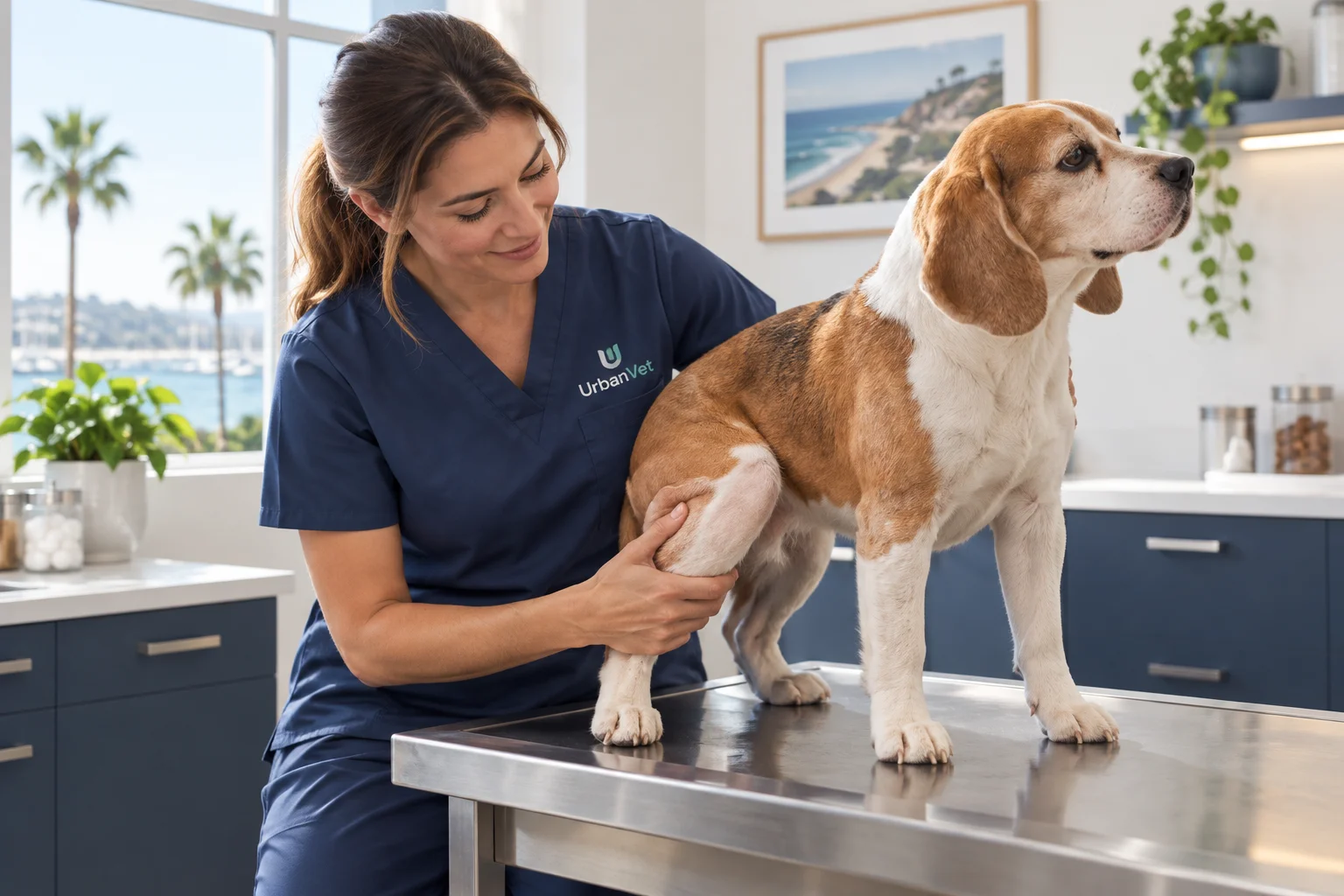
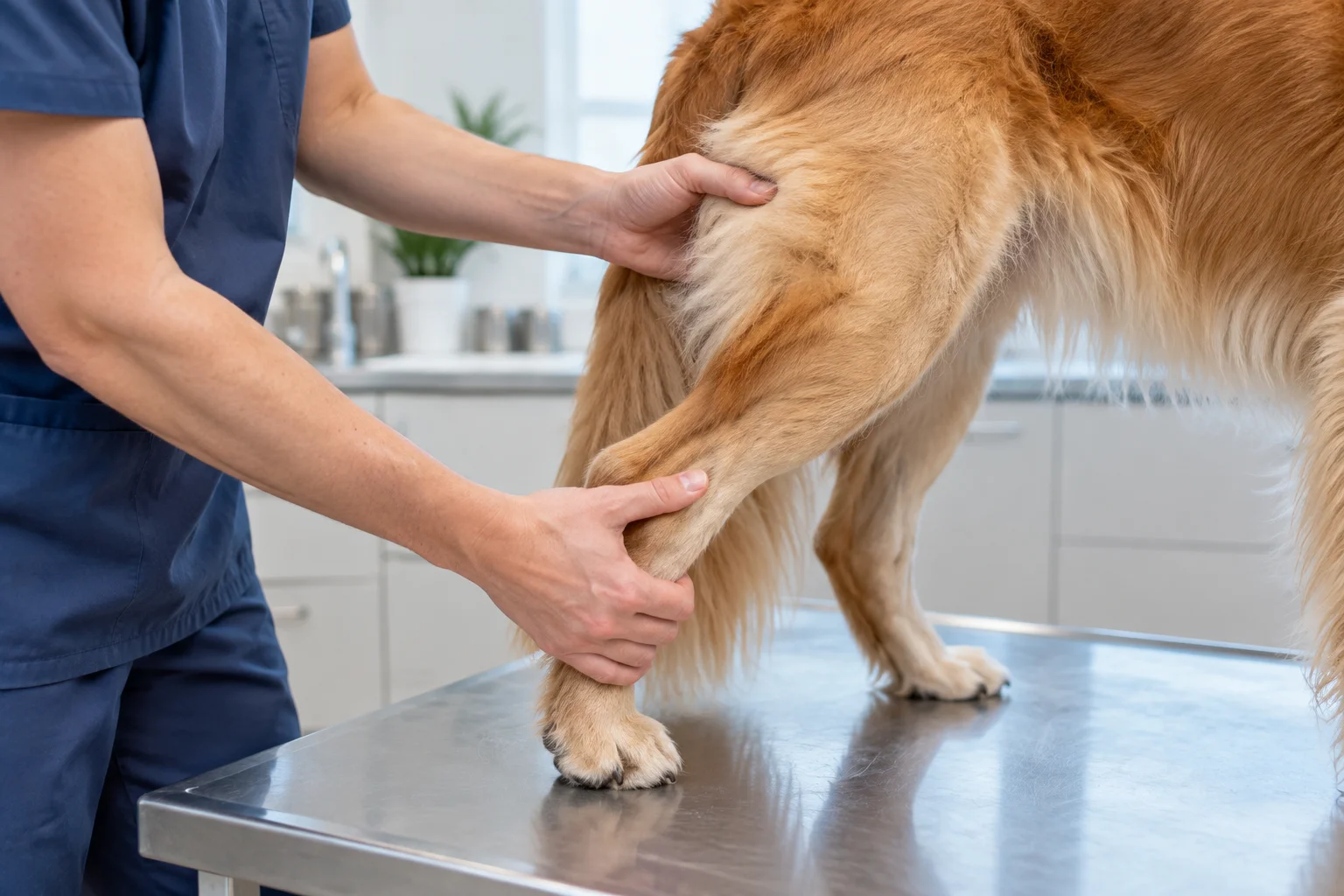
Diagnosing a torn ACL in dogs starts with a physical exam checking for a cranial drawer sign, a small forward slide of the shin bone relative to the thigh bone that happens once the cruciate ligament can no longer hold the joint stable. Vets also check for a tibial thrust and compare range of motion between the injured and healthy leg, sometimes under light sedation if pain masks the result. X-rays rule out fractures, bone tumors, and kneecap problems that can look similar, and show the joint changes typical of a chronic tear. A full workup through UrbanVet's Pet Diagnostics team, pairing a hands-on exam with imaging, gives the clearest answer on whether the ACL is partially or fully torn and whether the meniscus is involved.
TPLO vs Lateral Suture: Comparing the Two Main Surgical Repairs
What Is TPLO Surgery and How Does It Fix a Torn ACL?
TPLO surgery, short for Tibial Plateau Leveling Osteotomy, does not repair the torn ligament at all. Instead, the surgeon cuts and rotates the top of the shin bone, the tibial plateau, changing its angle so the knee joint stays stable during normal walking without needing the cruciate ligament. A bone plate and screws hold the new angle while the cut bone heals. TPLO is generally considered among the best choices for larger, more athletic dogs because it restores a stable, near-normal gait that holds up well under higher activity. Some surgeons also offer Tibial Tuberosity Advancement, or TTA, a related osteotomy aiming for a similar mechanical result.
What Is Lateral Suture Surgery and How Does It Compare to TPLO?
Lateral suture surgery, sometimes called an extracapsular repair, places a strong synthetic suture outside the knee joint in roughly the direction of the torn ligament, mimicking its job until scar tissue forms and takes over. It is typically less expensive than TPLO and does not require cutting bone, so recovery is somewhat more straightforward for some dogs. The tradeoff is that the suture can stretch or loosen over time, so lateral suture tends to hold up best in smaller, less active dogs rather than large or very athletic ones. Vets generally recommend choosing between the two based on a dog's weight, activity level, and knee anatomy, not on price alone.
Can a Dog's Torn ACL Heal Without Surgery?
A torn ACL in dogs can sometimes be managed without surgery, but the ligament itself does not grow back together the way a sprained muscle heals. Conservative management relies on strict rest, weight control, joint supplements, and physical therapy to build the muscles around the knee joint enough to compensate for the missing ligament. This route tends to work best in dogs under about 20 to 25 pounds, and it usually takes several months of committed rest and rehab before the knee feels reliably stable. Larger or more active dogs managed without surgery are more likely to develop early arthritis and often need surgery anyway once the joint has already worn down.
Cost, Recovery, and What Happens If a Torn ACL Goes Untreated
How Much Does Torn ACL Surgery Cost for a Dog and What Does Recovery Look Like?
Surgical costs for a torn ACL vary by procedure, dog size, and region, since TPLO generally costs more than lateral suture surgery due to the bone plate, screws, and added imaging involved. Recovery after either surgery follows a similar arc: strict leash-only activity and crate rest for the first several weeks, a gradual return to short walks, and physical therapy to rebuild muscle around the knee joint. Most dogs touch the toe down within a week or two, and full recovery, roughly 12 to 16 weeks of restricted activity before unrestricted exercise, depends on the dog's age, weight, and how closely the plan is followed. The first two to three weeks matter most, since too much activity too soon is a leading cause of implant problems or a re-torn repair.
How Long Can a Dog Live With an Untreated Torn ACL?
A torn ACL is rarely life-threatening on its own, and many dogs live a full lifespan with an untreated tear. The real cost is quality of life in that knee joint, not lifespan overall. Left unaddressed, an unstable joint develops early arthritic changes within weeks, producing chronic joint inflammation and pain that rest alone does not fully reverse. Many dogs also tear the meniscus or injure the opposite knee within a year or two, since the good leg carries extra weight while the injured one heals.
Frequently Asked Questions
Can a dog tear its ACL without any trauma or accident?
Yes. Most cases of a torn ACL in dogs develop gradually as the ligament weakens from age, genetics, breed conformation, and repeated small stresses, rather than from one dramatic injury. A normal jump off the couch is often just the final step on a ligament that had already been weakening for months.
Is TPLO or lateral suture better for a large or active dog?
TPLO is generally considered better for larger or more athletic dogs because it changes the mechanics of the knee joint itself rather than relying on a suture that can stretch under heavier loads. Lateral suture can still work in bigger dogs, but an exam of the dog's weight, activity level, and knee anatomy is the best way to decide.
How soon after a torn ACL should a dog have surgery?
Most vets recommend scheduling surgery within a few weeks of diagnosis, once swelling has settled enough for a clean surgical field, since an unstable joint left too long develops arthritis and meniscus damage faster. Waiting is not dangerous short term, but delaying past a month or two generally makes recovery slower and the outcome less predictable.
Can a torn ACL in a dog heal completely on its own?
No, the ligament does not reattach or regrow once torn. Some dogs, especially smaller ones, can build enough surrounding muscle through rest and physical therapy to function well without surgery, but the joint remains less stable than a surgically repaired or fully healthy knee.
Get an Orthopedic Evaluation for Your Dog's Torn ACL
If your dog is limping or favoring a back leg, an orthopedic exam is the only reliable way to know whether it is a torn ACL and which repair fits your dog's size and activity level. Catching the injury early and starting treatment before the joint declines further is the one most important factor in a good long-term outcome. Contact UrbanVet in Newport Beach to schedule an evaluation.