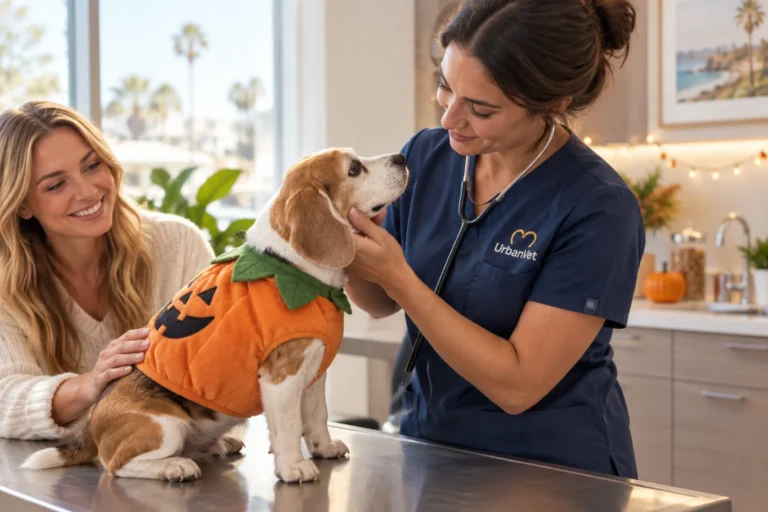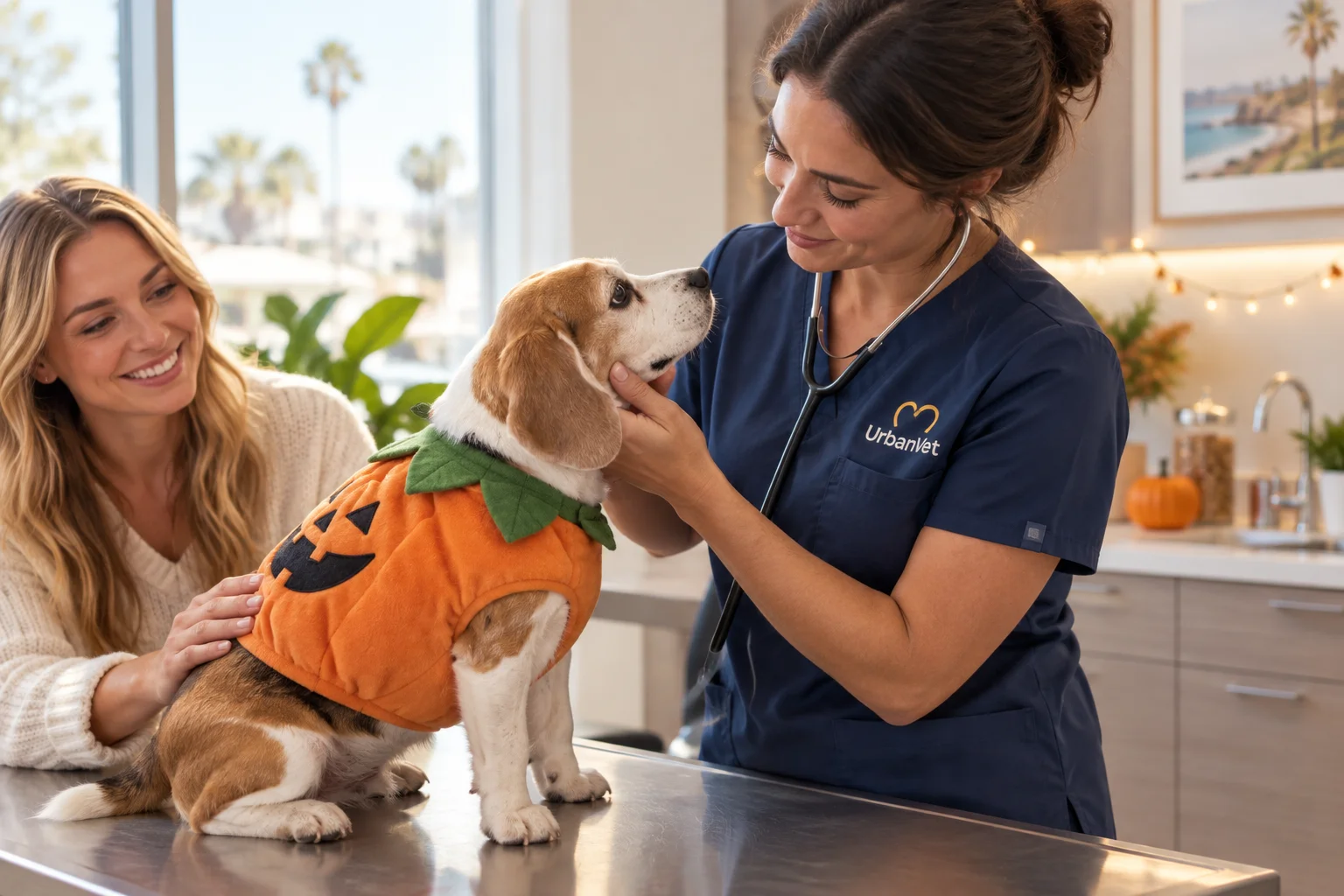
Halloween brings candy bowls, costumes and a steady stream of trick-or-treaters that can turn a fun night into a scary one for pets. This halloween pet safety guide covers the toxic treats, costume comfort and calming strategies Newport Beach families need, so year-round Primary & Preventative Pet Care habits carry into the holiday season too.
By Urban Vet Team, Veterinary Professionals
Is Halloween Candy Dangerous for Dogs and Cats?
Yes. Most Halloween candy bowls contain chocolate, sugar-free gum and hard candies that pose real risks to dogs and cats, and pets that raid a bowl rarely stop at one piece. Wrappers add a second hazard: foil and cellophane can cause an intestinal blockage even when the candy inside is harmless. Keep the bowl in a closed cabinet, and make sure children don't hand treats directly to pets.
Which Halloween Candy Ingredients Are Toxic to Pets?
Chocolate contains theobromine, which dogs and cats metabolize far more slowly than people do, and darker chocolate carries more of it per ounce. Xylitol, found in sugar-free gum and mints, is dangerous in even smaller amounts and can cause a rapid blood sugar drop or liver failure. Raisins and grapes are toxic to dogs at any amount. If you're unsure whether your pet ate something with xylitol, treat it as an emergency and call your veterinarian right away.
Are Pet Costumes Safe for Dogs and Cats?
Costumes can be safe when they fit properly and the pet tolerates wearing one, but not every pet should be dressed up. Your pet should be able to walk, sit, see and breathe normally, with no material over the eyes or chest. Skip costumes with small buttons, bells or dangling parts a curious cat or teething puppy might swallow. Pinned-back ears, a tucked tail or biting at the fabric mean it should come off. A bandana or festive collar works fine instead if a full outfit stresses a pet out.
How to Keep Your Pet Calm and Stress-Free on Halloween Night
Doorbells, strangers in costumes and unfamiliar sounds make Halloween night one of the more stressful evenings of the year for many pets. Set up a quiet room away from the front door, stocked with familiar bedding, water and a favorite toy. Background noise, like a television or fan, can mask doorbells enough to keep a nervous pet from spiraling. Pets already anxious around thunderstorms or fireworks tend to react more strongly, so start the calming routine before dusk, not after the first knock. A snug wrap or pressure vest can help, introduced before the event, not during it.
Which Halloween Decorations Are Hazardous to Pets?
Fake cobwebs, string lights and candles each carry a hazard. Cats especially will swallow synthetic cobweb strands, which can cause a blockage. Open-flame candles get knocked over by wagging tails, so battery-operated candles are safer. Keep extension cords taped down or hidden, since chewing through a live cord is a serious electrical hazard, especially for puppies and kittens.
Halloween Pet Safety at the Front Door When Trick-or-Treaters Ring the Bell
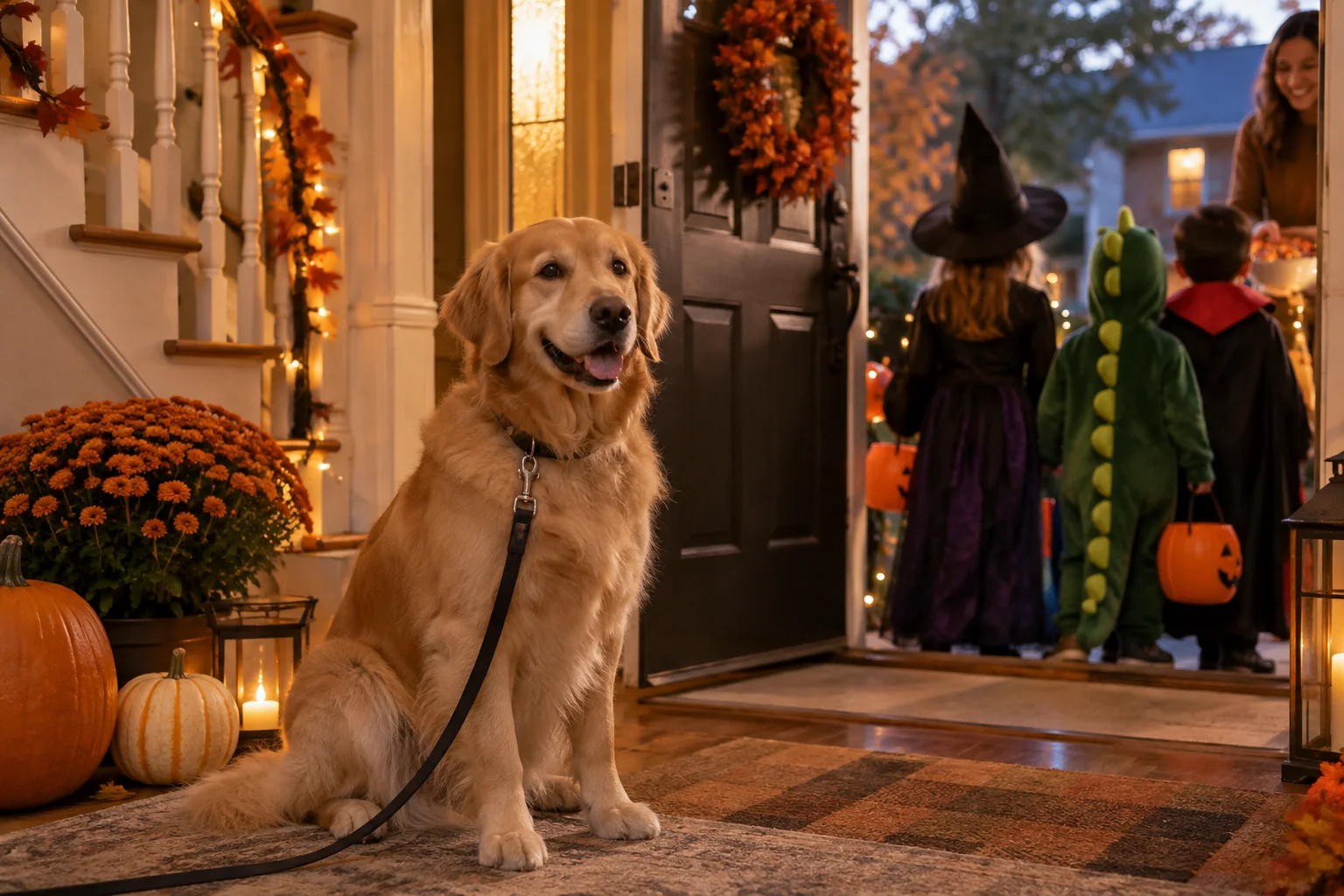
A door opening every few minutes for hours is exactly the chaos that leads to pets bolting outside. Put your dog or cat in another room, a crate, or on a leash before the first trick-or-treaters arrive. A baby gate a few feet back from the entry adds a buffer if the pet slips past. Make sure the collar ID tag and microchip both have your current phone number, since a startled pet often runs farther than expected.
What to Do If Your Dog Eats Chocolate on Halloween
If your dog eats chocolate, call your veterinarian or an emergency animal hospital right away rather than waiting for symptoms, since treatment works best within the first couple of hours. Note the kind of chocolate, roughly how much, and when, since that shapes whether your vet recommends inducing vomiting, activated charcoal, or bloodwork through Pet Diagnostics to check heart rate and electrolytes. Keeping a stocked pet first aid kit essentials list with your vet's number and the ASPCA Animal Poison Control Center number saves precious minutes. Do not give home remedies like salt or hydrogen peroxide without a veterinarian's direction.
How Much Chocolate Is Toxic to a Dog?
Toxicity depends on weight and chocolate type: baking and dark chocolate carry far more theobromine than milk chocolate. There's no universal safe amount, so any ingestion usually warrants a call to your veterinarian rather than a wait-and-see approach. Cats face the same risk if they eat it.
Is It Safe to Leave Your Pet Home Alone on Halloween Night?
Leaving your pet home alone is usually fine, and often safer than a noisy trick-or-treat walk for an anxious dog. Close curtains facing the street so a pet doesn't react to every costumed group, and leave a radio or television on. Confirm the candy bowl, candles and decorations are out of reach first. A pet camera offers peace of mind without opening the door mid-evening.
Can Pets Safely Eat Pumpkin or Other Halloween Treats?
Plain, cooked pumpkin without added sugar or spices is safe for most pets in small amounts, but pie filling and anything with raisins, chocolate or xylitol are not. Roasted seeds are fine occasionally if plain, unsalted and stripped of strings and pulp. When in doubt, pet-specific treats are the simpler, safer choice.
Frequently Asked Questions
Is Halloween candy poisonous to dogs and cats?
Yes, several common ingredients are dangerous, including chocolate, xylitol in sugar-free gum, and raisins in trail mix. Wrappers add a choking and blockage risk too. Store the bowl out of reach and call your veterinarian right away if you suspect your pet got into it.
How long does it take for chocolate poisoning symptoms to show in dogs?
Symptoms often appear within 6 to 12 hours and can include vomiting, diarrhea, restlessness, a fast heart rate and, in severe cases, tremors or seizures. Don't wait for symptoms before calling your veterinarian.
Are glow sticks toxic if my dog chews one?
The liquid inside most glow sticks is mildly irritating rather than seriously toxic, and its bitter taste usually makes pets spit it out and drool dramatically. Rinse your pet's mouth with water and call your veterinarian if drooling, vomiting or eye irritation continues.
Can cats get stressed by Halloween decorations and noise?
Cats are often more sensitive to Halloween's noise and visual changes than dogs, and decorations like animated props or flashing lights can be especially unsettling. A quiet room with a litter box, water and a hiding spot usually helps far more than including them in the festivities.
What human Halloween treats are safe for pets?
Plain pumpkin, small amounts of plain cooked meat, and pet-specific treats are safe options. Avoid anything with chocolate, xylitol, raisins or heavy spices, and skip caramel or taffy that can pull at teeth. When unsure about an ingredient, treat it as unsafe until confirmed otherwise.
Have Questions About Keeping Your Pet Safe This Halloween?
Halloween only comes once a year, but the toxic ingredients, stress and escape risks are easy to plan around with a little preparation and, when something doesn't look right, a quick call. If your pet gets into anything concerning this Halloween or you want guidance before the holiday hits, Contact our Newport Beach team and we'll walk you through next steps.